The right brush starts with the coat
There is no single best dog brush. A short, smooth coat needs a different contact surface from a long coat with tangles or a dense double coat shedding its undercoat. Start by separating three questions: Is the hair short or long? Is there a soft undercoat beneath the top coat? Are you removing loose hair, opening tangles or simply finishing the surface? The answer tells you whether to begin with silicone, a slicker or a rake.
Quick choice by coat and task
| Coat or task | Best first tool | Why |
|---|---|---|
| Short, smooth coat | Silicone brush or grooming mitt | Collects loose surface hair with broad, gentle contact |
| Medium or long coat | Slicker with rounded tips | Separates loose hair and small tangles section by section |
| Dense undercoat | Undercoat rake | Reaches loose undercoat that a surface brush may miss |
| Curly coat | Slicker plus finishing comb | Opens the coat, then checks whether hidden knots remain |
| Sensitive dog | Soft silicone or protected tips | Makes pressure easier to control during training |
Silicone: gentle contact for surface hair
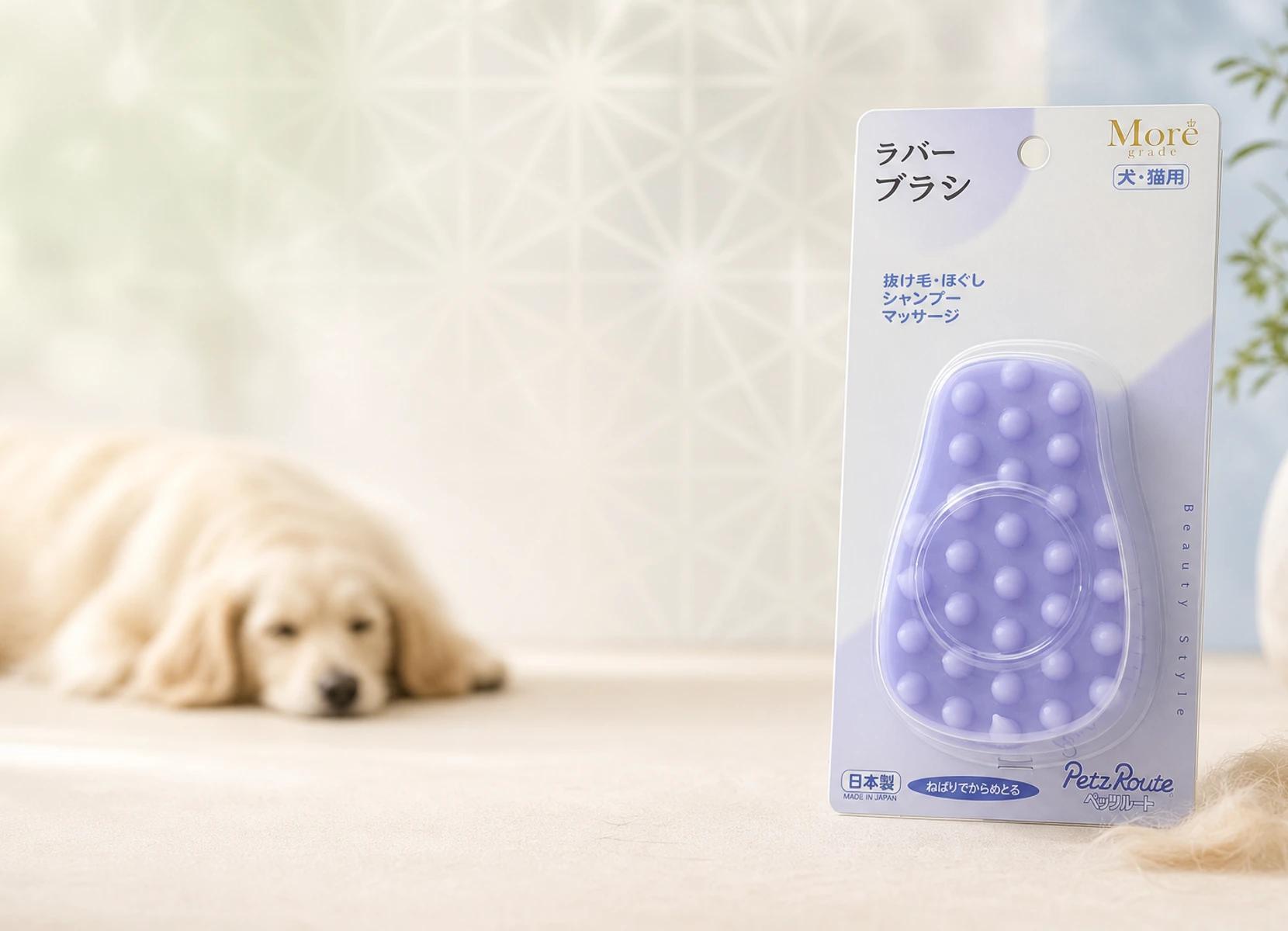
A silicone brush is especially useful when you want broad, flexible contact. It can collect loose hair from short and medium coats and is easy to rinse after use. Work in the direction of hair growth with slow strokes. Silicone should glide, not drag. If the tool repeatedly catches deep in a long coat, switch to sections and use a comb or rake designed for depth instead of increasing pressure.
A gentle silicone option for regular grooming

Japan Premium Pet
Japan Premium Pet "Ultra Silicone Brush for Removing Long and Medium Hair, Purple"
View productSlicker: controlled work through longer hair
A slicker has many closely spaced pins and is useful for medium, long or curly coats. The technique matters as much as the tool: lift a small layer, brush the ends first and move gradually toward the skin while keeping the wrist light. Do not scrape the same area repeatedly. Rounded or protected tips can make the first sessions easier for a sensitive dog, but they do not make heavy pressure safe.
For loose hair and everyday detangling
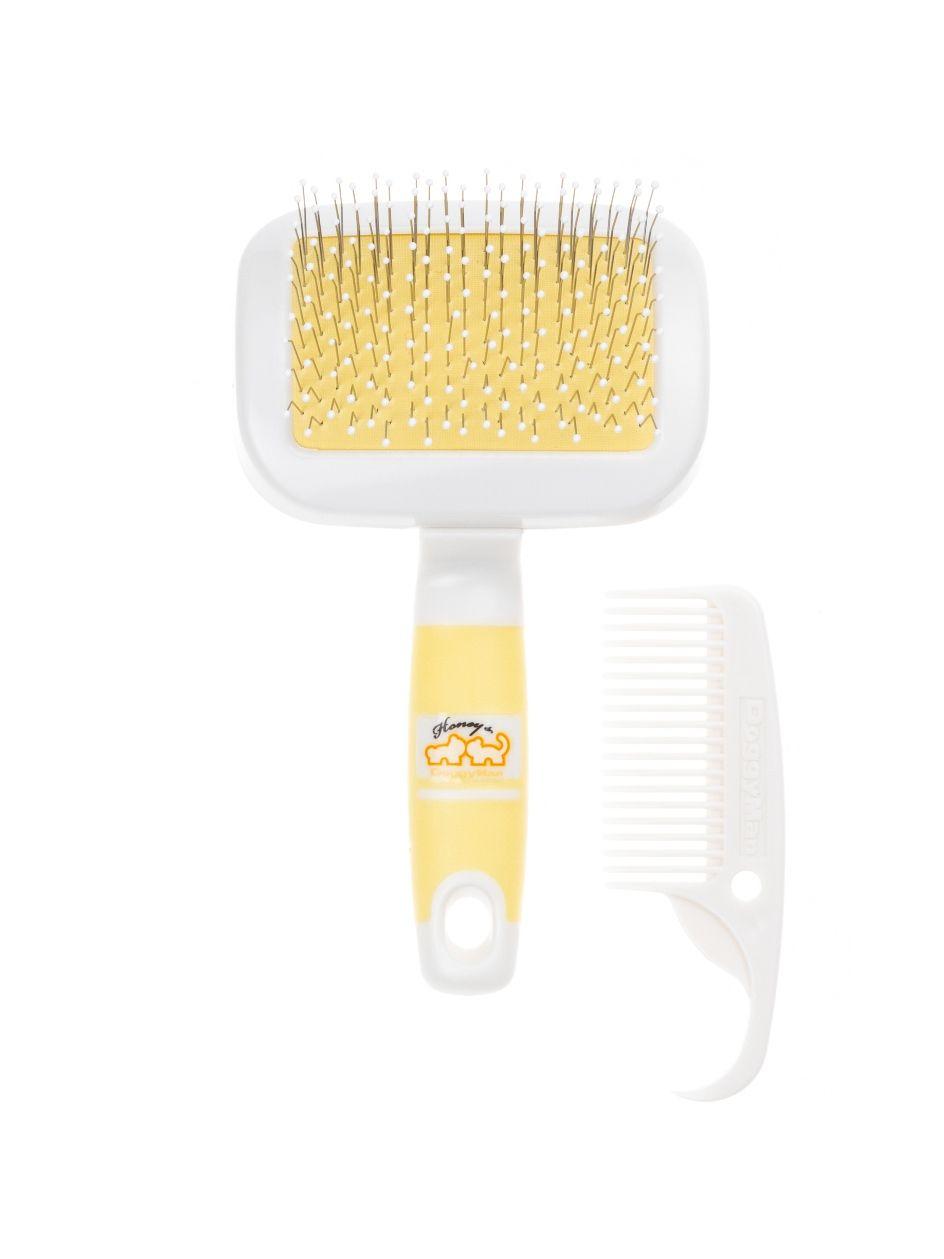
Japan Premium Pet
Smoothing brush with droplet to eliminate hair loss for dogs and cats, complete with comb, universal for long and short hair.
View productRake: when the loose hair sits underneath
A double coat contains a protective top coat and a softer undercoat. During shedding periods, a rake can reach loose undercoat more efficiently than a surface brush. Use it only on a coat it can pass through without force. A rake is not a shortcut through a tight mat: hard resistance, skin movement or discomfort means stop, separate the area carefully or ask a groomer for help.
A two-level rake for long coats and undercoat

Japan Premium Pet
Specialized rake for combing tangles. Double-leveled. For long hair.For dogs and cats
View productA two-minute comfort check
A simple grooming order
- Feel the coat with your fingers and locate tangles before brushing.
- Use a detangling tool only where depth is needed.
- Brush loose hair in small sections with light pressure.
- Finish with a comb or soft brush to check the result.
- Clean the tool after every session and inspect the skin.
Frequently asked questions
Can one brush work for every dog?
One brush can cover several routine tasks, but no tool is ideal for every coat structure. Multi-dog households often need at least a gentle surface tool and a deeper detangling tool.
How often should I brush my dog?
Frequency depends on coat, shedding and tendency to mat. Short coats may need brief weekly sessions; long or curly coats often need more frequent checks.
Should a slicker touch the skin?
It should work through the coat with a light hand, not scrape the skin. Stop if the dog flinches or the skin becomes red.
Can I cut out a mat at home?
Scissors close to the skin can cause injury because skin may be pulled into the mat. Tight or skin-level mats are safer for a professional groomer or veterinarian.
Sources
- AKC — Dog Brushes: How to Choose the Right Dog Brush — https://www.akc.org/expert-advice/health/types-dog-brushes-shedding/
- VCA — Grooming and Coat Care for Your Dog — https://vcahospitals.com/know-your-pet/grooming-and-coat-care-for-your-dog
- RSPCA — Grooming your dog — https://www.rspca.org.uk/adviceandwelfare/pets/dogs/health/grooming
- Japan Premium Pet live product records — https://japanpremium.eu/de/catalog?pets=dogs&subcats=dog-grooming
Find the right care products
Compare Japan Premium Pet products selected for this routine.
View products