Find the cause, then keep the eye area clean and dry
Tear stains are reddish-brown marks below the inner corner of the eyes. They appear when tears spill onto the face instead of draining through the tear ducts, and porphyrins, iron-containing pigments in the tears, colour light fur. To remove tear stains in a dog, first have a vet rule out an eye problem, then keep the area clean and dry every day: wipe gently from the inner corner outwards with a soft, moist wipe, dry the fur and keep the hair around the eyes short. Stained hair usually improves slowly, so judge progress over several weeks. Sudden or one-sided tearing, red eyes or squinting are a job for the vet, not for a wipe.
Common causes and what they mean
| Cause | Typical signs | What to do |
|---|---|---|
| Face and eyelid shape, for example flat faces | Constant mild wetness on both sides; common in Pugs, Shih Tzus and Persian cats | Daily cleaning and drying; ask the vet whether the eyelids need assessment |
| Hair or debris at the tear duct openings | Wet fur in the inner corner, stains on a light coat | Keep the hair short, ideally trimmed by a groomer, and clean daily |
| Blocked or narrow tear ducts | Tears overflowing on one or both sides, sometimes from a young age | Veterinary check; the vet can test drainage and flush the ducts if needed |
| Irritation, allergies or infection | Red eyes, thicker discharge, rubbing the face | See the vet before cleaning more often |
| Painful eye problems such as ulcers, abnormal lashes, rolled-in lids or glaucoma | Squinting, a closed or cloudy eye, sudden heavy tearing | Prompt veterinary appointment |
A gentle daily routine in two minutes
Choose a calm moment, for example after a walk or before bed, and sit next to your dog rather than bending over it. Put a soft, moist fingertip wipe on your index finger and wipe the fur below the eye from the inner corner outwards and downwards, never across the eyeball. Use a fresh wipe or a clean side for the second eye, so you do not carry dirt from one eye to the other. Loosen dried crusts by holding the moist wipe against them for a few seconds instead of rubbing. Then dry the fur with a clean, soft tissue, because moisture left in the coat keeps the staining going. Reward your dog afterwards. Once or twice a day usually fits easily into the routine; if the fur is soaked again within minutes, the tearing itself needs a vet check.
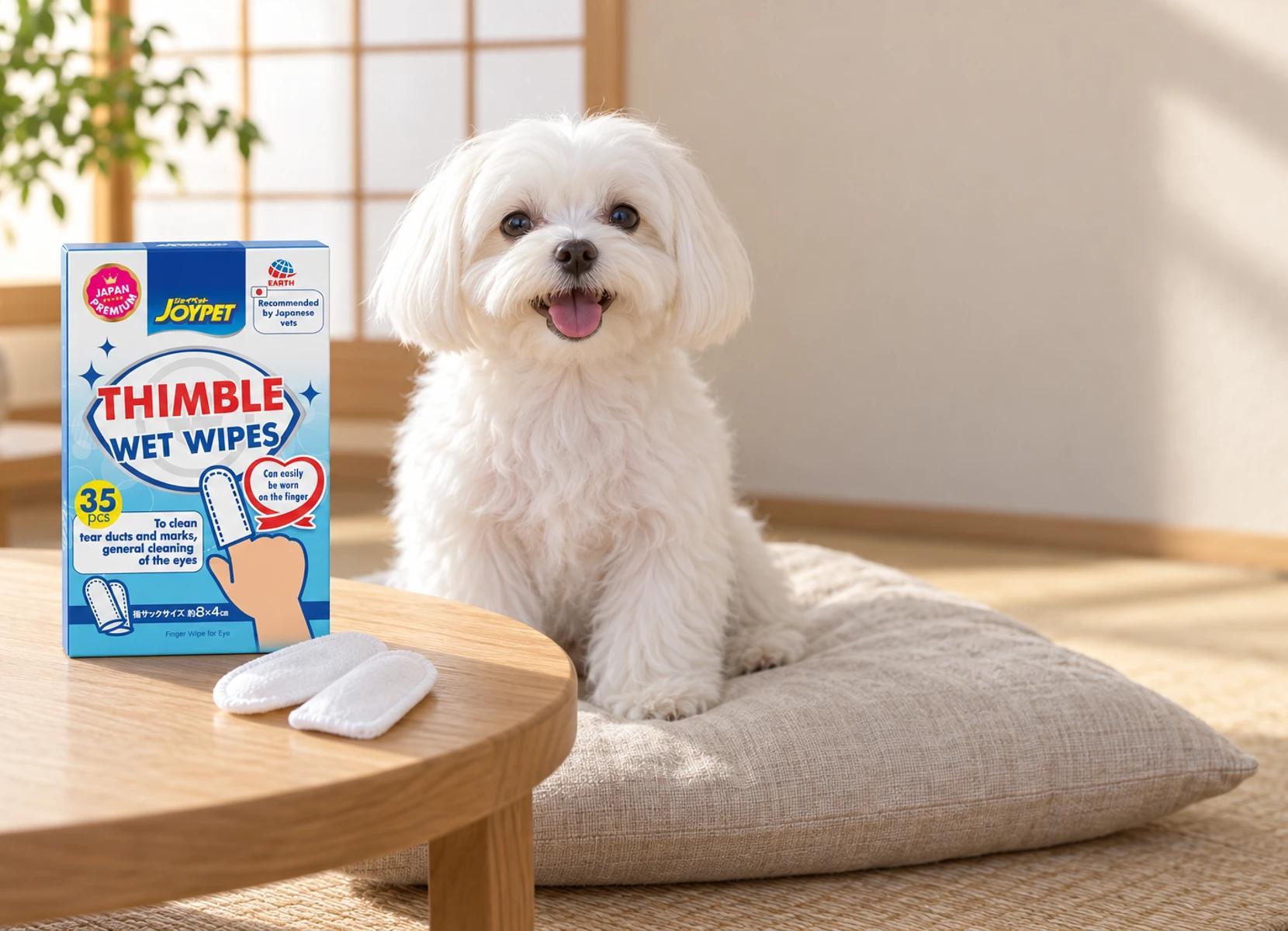
Soft fingertip wipes with aloe vera for the fur around the eyes

Japan Premium Pet
Anatomical wet fingertip wipe to eliminate lacrimal tracks and care for the eyes of dogs and cats, 35 pcs.
View productTrimming, drying and the rest of the face
Long hair in the inner corner of the eye can carry tears onto the face and block the small openings of the tear ducts, so keep it short. Ask a groomer to trim it, or have it done at the vet; do not use pointed scissors near the eye yourself, especially if your dog moves. Wet beards and muzzle fur can stain too, so wipe and dry the mouth area after meals and drinking. For the rest of a white or light coat, a mild shampoo made for pets keeps the fur clean and even-looking during the regular bath, but shampoo stays on the body, well away from the eyes. Check the skin under the stain: redness, an unpleasant smell or sore, moist skin point to irritation or infection that needs veterinary treatment.
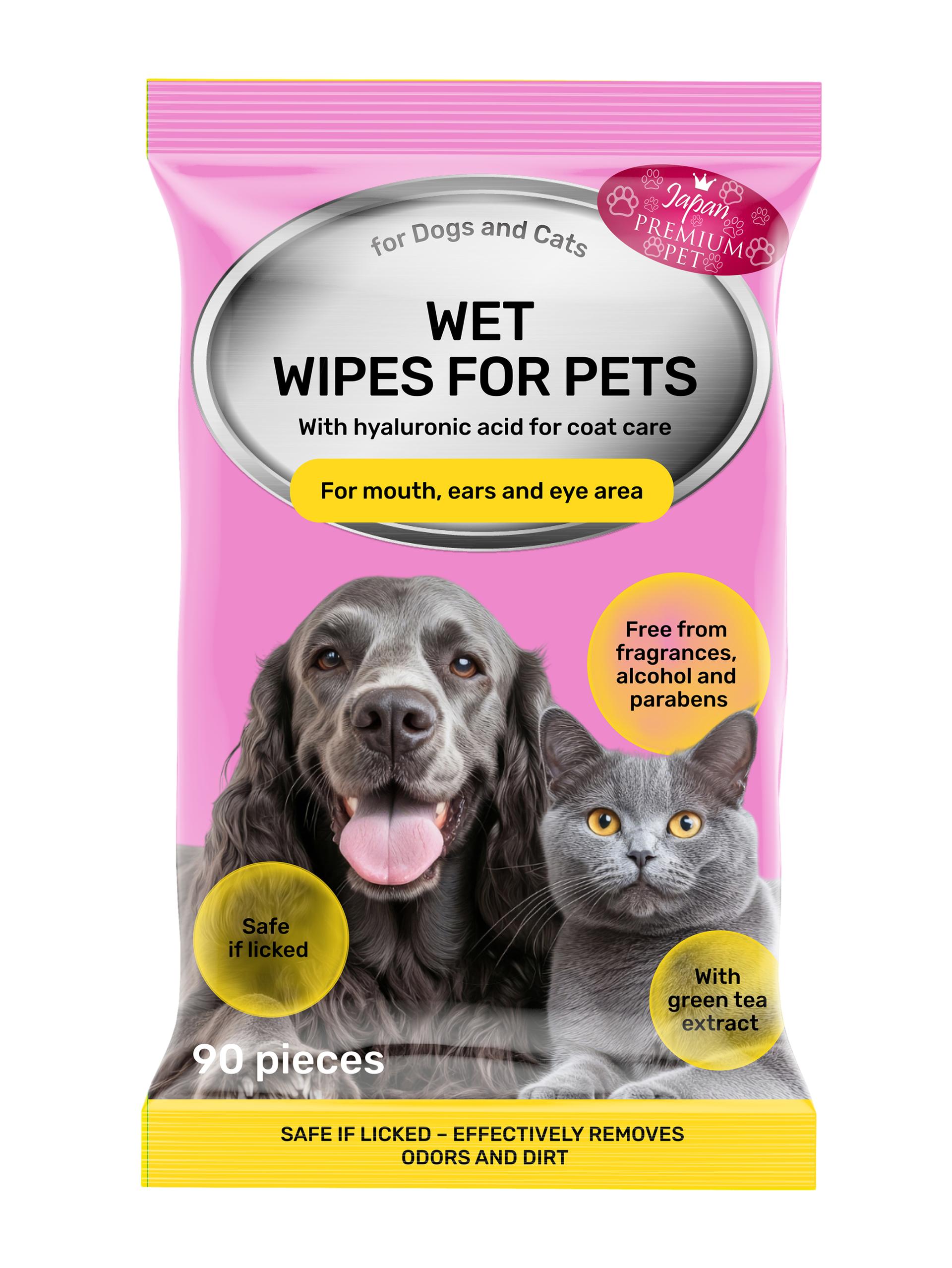
Alcohol-free wipes for everyday face, muzzle and ear care
Japan Premium Pet
Wet wipes for basic mouth, ears and eyes care for dogs and cats, 90 pcs.
View productWhat not to use near the eyes
Many home remedies circulate online, and several are risky. Never use hydrogen peroxide near the eyes: splashes can cause severe damage. Contact lens solution does not belong near a dog’s eye either, and neither does any product that is not made for use around pets’ eyes. Be wary of tear-stain powders and supplements that contain antibiotics: veterinarians discourage low-dose antibiotics for cosmetic purposes because they can promote antibiotic resistance, and over-the-counter tear-stain products have not been proven effective in research trials. Whitening shampoos are for the coat only. If a stain does not improve with cleaning and drying, ask your vet about the cause instead of reaching for a stronger product.
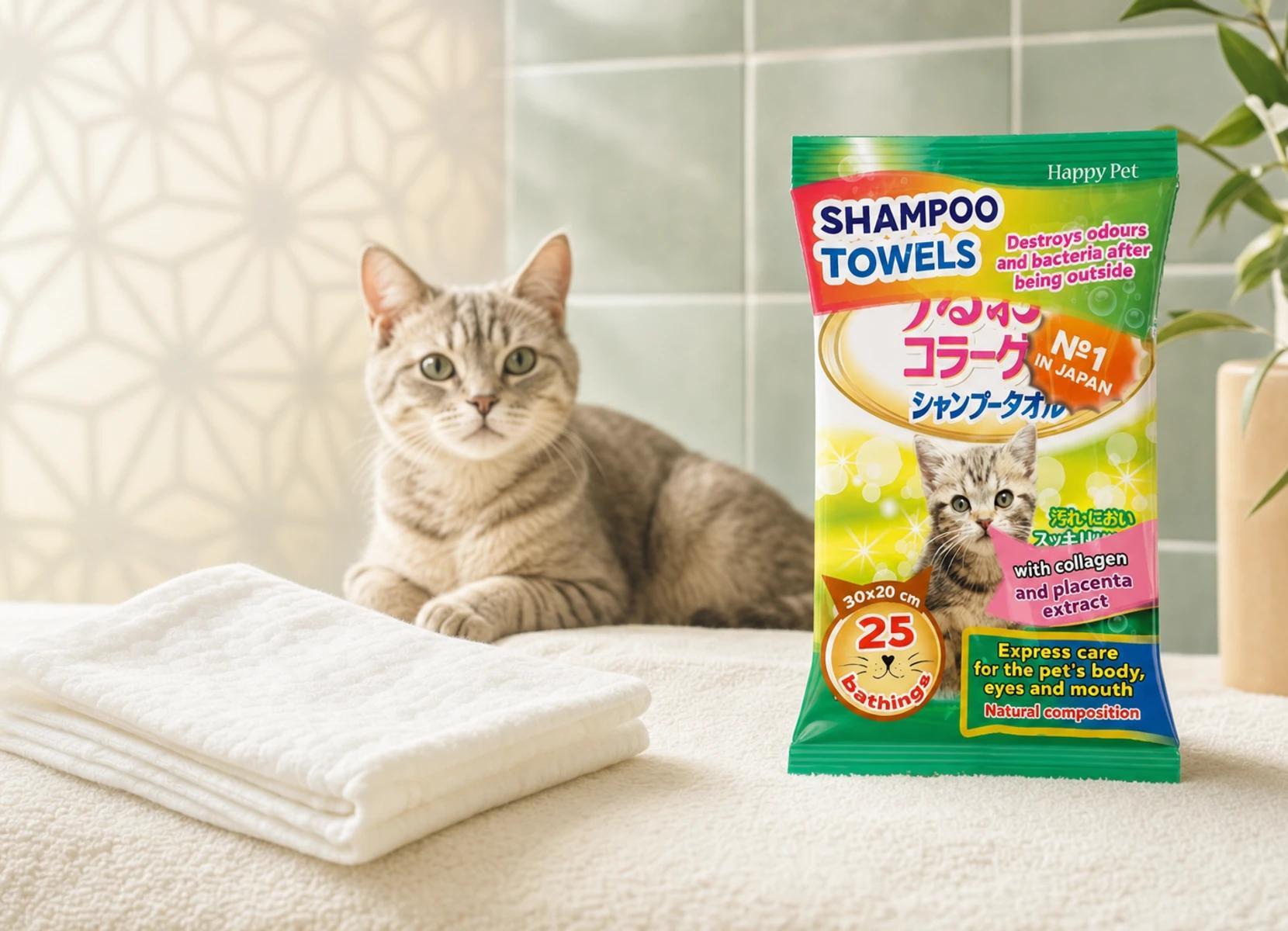
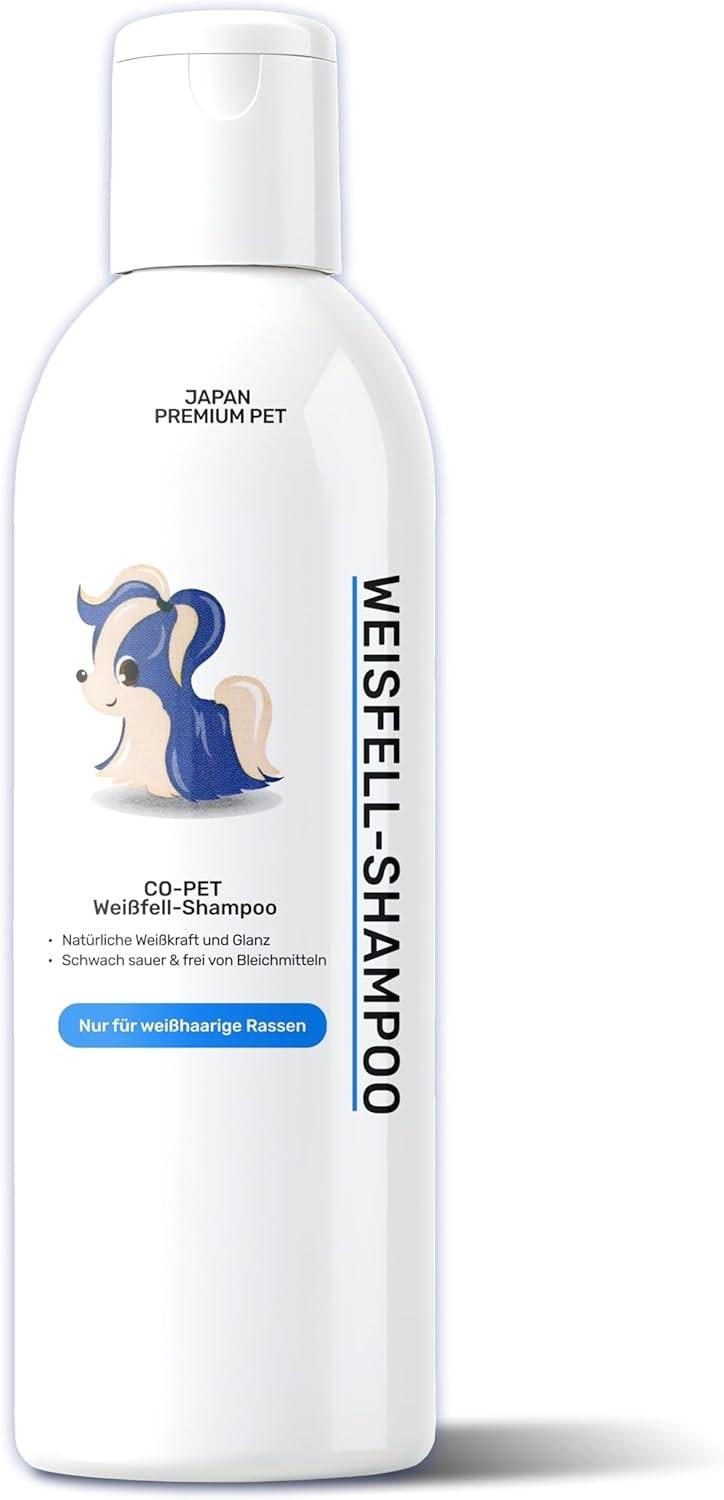
Gentle brightening shampoo for white coats, for the body only
Japan Premium Pet
Gentle brightening shampoo for white coats of cats and dogs. CO CO PET, 300 ml.
View productSigns that need a prompt vet visit
Tear-stain routine, step by step
- Have the eyes checked by a vet, especially if the tearing is new or affects only one eye.
- Clean the fur below each eye once or twice a day with a fresh, soft, moist wipe, from the inner corner outwards.
- Dry the fur thoroughly with a clean tissue.
- Keep the hair in the inner eye corner short, trimmed by a groomer or at the vet.
- Wash the rest of a light coat with a mild pet shampoo during regular baths, keeping it away from the eyes.
- Review progress after several weeks and go back to the vet if nothing changes.
Frequently asked questions
Are tear stains dangerous?
The colour itself is harmless, but constant moisture can irritate the skin and lead to infection, and overflowing tears can be a sign of an eye problem. That is why a vet check comes first.
Why do white dogs get tear stains more often?
The pigments in tears reach every coat, but the reddish-brown tone is simply much more visible on white or light fur. Maltese, Shih Tzus, Poodles and Cocker Spaniels are often affected, as are flat-faced cats such as Persians.
Can tear stains be removed completely?
They often fade a lot once the fur is kept clean and dry and the cause is managed. If the tearing is linked to the shape of the face or eyelids, stains may return and need ongoing care.
Are tear-stain supplements or powders a good idea?
Be cautious. Veterinarians discourage products with low-dose antibiotics, and over-the-counter tear-stain products have not been proven effective in research. Discuss any supplement with your vet first.
Does this routine also work for cats?
Yes, the same gentle routine suits light-coated and flat-faced cats. Cats with watery eyes, sneezing or discharge should see a vet, because conjunctivitis and other eye conditions can be behind the tearing.
Sources
- VCA Animal Hospitals — Eye Discharge (Epiphora) in Dogs — https://vcahospitals.com/know-your-pet/eye-discharge-or-epiphora-in-dogs
- VCA Animal Hospitals — Eye Discharge (Epiphora) in Cats — https://vcahospitals.com/know-your-pet/eye-discharge-or-epiphora-in-cats
- MedVet — Tear Staining in Dogs (reviewed by a board-certified veterinary ophthalmologist) — https://www.medvet.com/tear-staining-in-dogs/
- Merck Veterinary Manual — Nasolacrimal and Lacrimal Apparatus in Animals — https://www.merckvetmanual.com/eye-diseases-and-disorders/ophthalmology/nasolacrimal-and-lacrimal-apparatus-in-animals
- Japan Premium Pet dog hygiene range — https://japanpremium.eu/de/categories/dog-hygiene
Find the right care products
Compare Japan Premium Pet products selected for this routine.
View products