Small, calm cuts are safer than one ambitious session
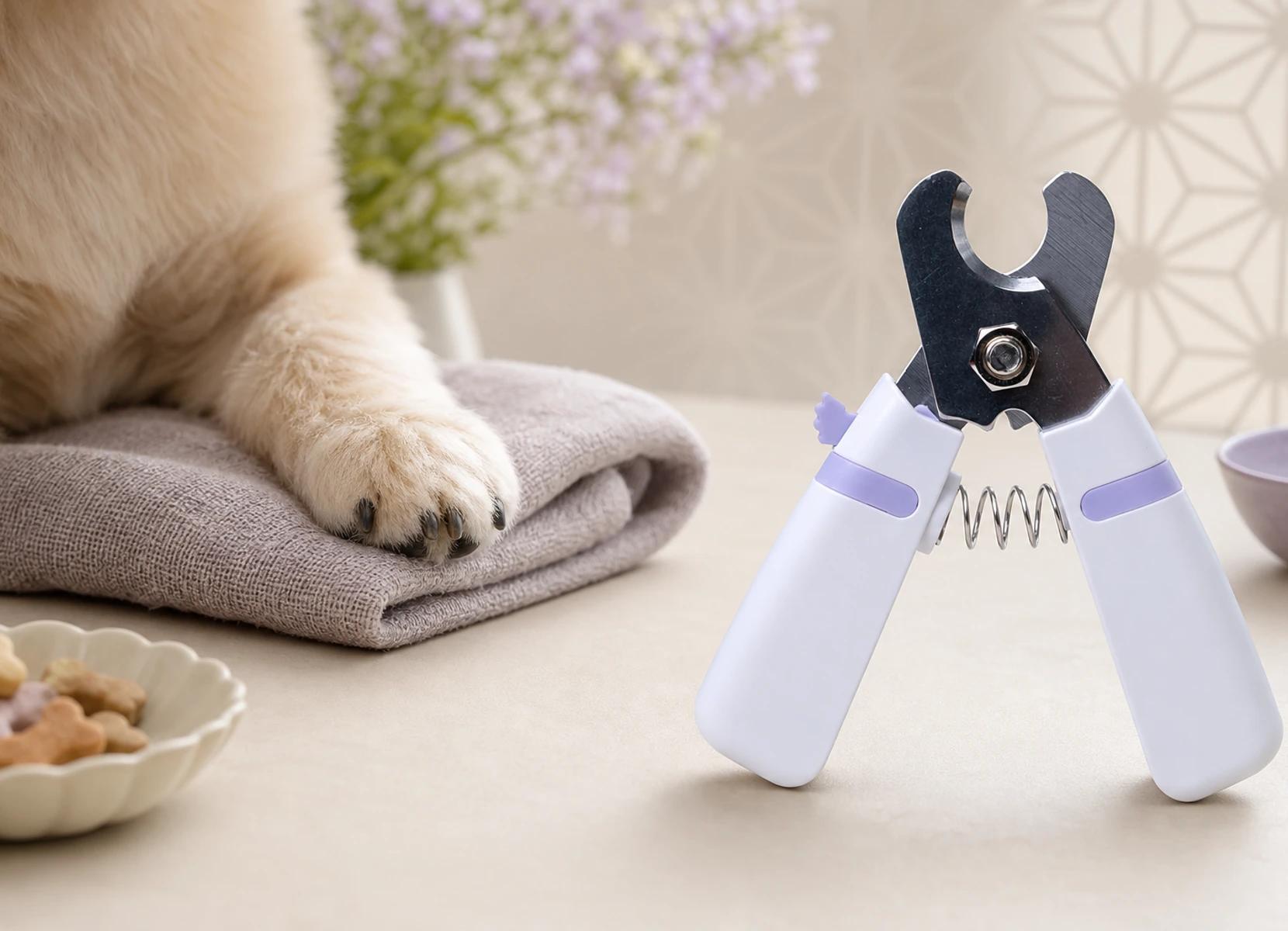
Dog nails should be short enough for comfortable standing and walking, but the living tissue inside the nail—the quick—must be protected. If nails click constantly on a hard floor, change paw position or touch the ground before the pads in a normal stance, they deserve a closer check. The safest home approach is a sharp, correctly sized tool, good light, a stable paw and tiny cuts. If anatomy is unclear or the dog is frightened, a groomer or veterinarian is the right choice.
Choose the tool for control
| Tool | Useful for | Check before use |
|---|---|---|
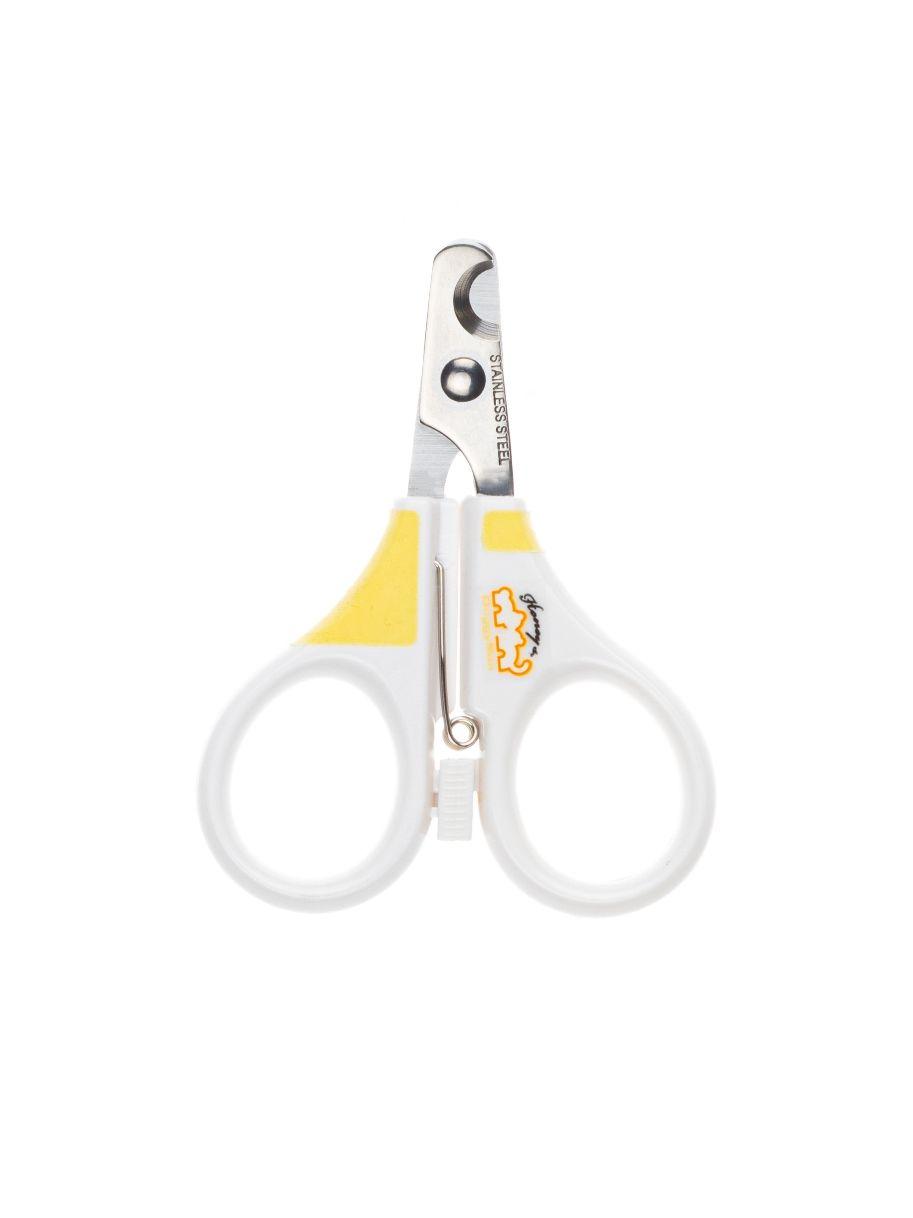
| Small curved clipper | Small dogs and thin nails | Blade closes cleanly and the spring returns smoothly |
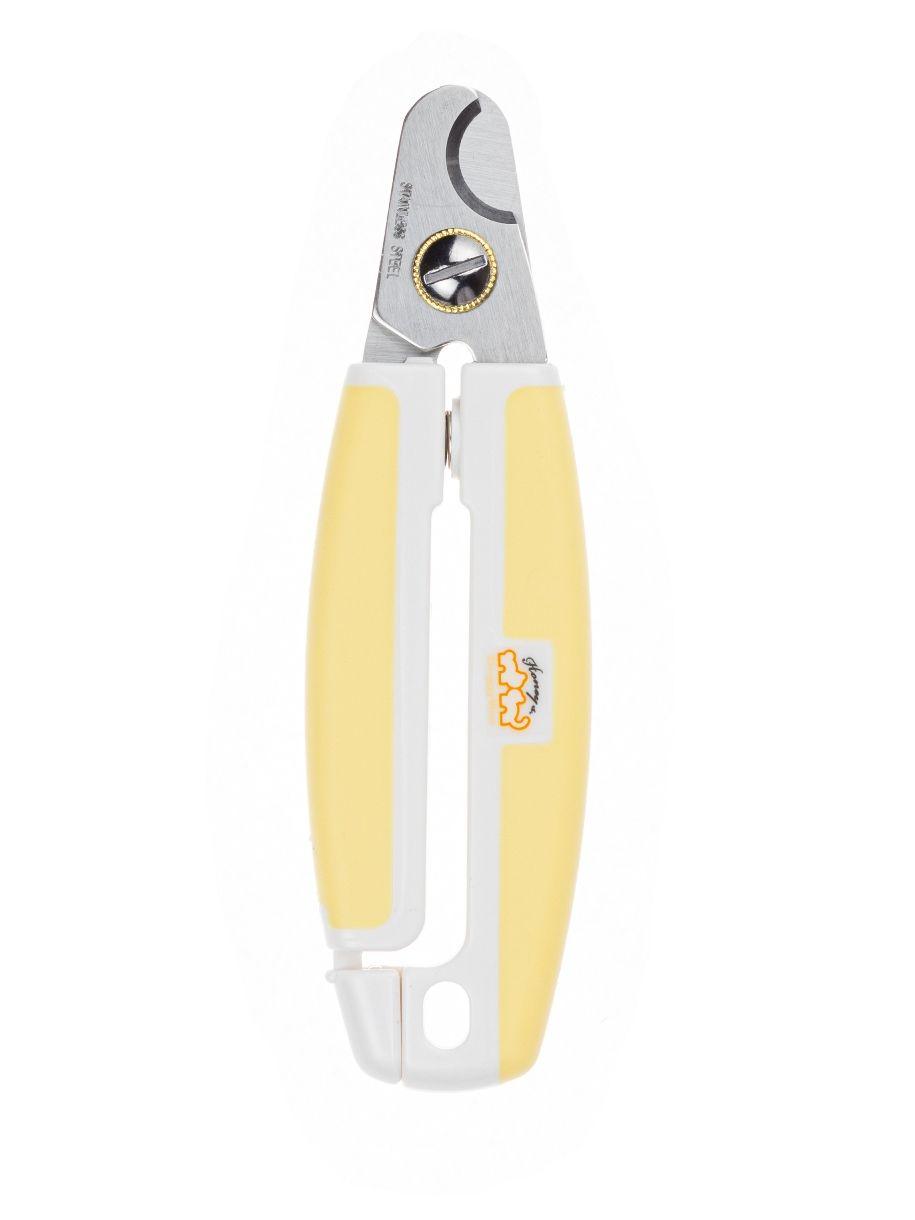
| Clipper with guard | Handlers who value a physical depth reference | A guard is not a substitute for seeing the cutting line |
| Heavy-duty sharp clipper | Medium to thick nails | Correct jaw size, sharp edge and non-slip grip |
| File or grinder | Smoothing edges and gradual shortening | Noise, heat and vibration tolerance |
Before the first cut: train the sequence
Practice away from the cutting moment. Touch the shoulder, slide the hand down the leg, hold one paw for a second, touch one nail, show the tool and reward. Repeat until each step feels ordinary. Place the dog on a non-slip surface and position yourself so you are not twisting the leg. Prepare styptic powder or another veterinarian-recommended bleeding aid before starting, not after an accident.
Compact spring clipper for small dog nails
How to trim light and dark nails
On a light nail, the pink quick is often visible. Cut a small amount in front of it at the natural angle of the nail. Dark nails require more caution: remove very thin slices and inspect the cut face after each one. A pale, dry centre generally means you can reassess; a darker central dot means stop before reaching living tissue. Never rely on a single large cut.
Guarded clipper with a rubber grip
Sharpness matters more than force
A dull tool squeezes before it cuts and can split the nail or make the dog pull away. Select a jaw size that supports the nail, keep the blade perpendicular to the cutting direction recommended for that tool and make one clean movement. If you need excessive hand force, stop and check size and sharpness instead of wrestling with the paw.
Sharp grooming clipper for controlled cuts
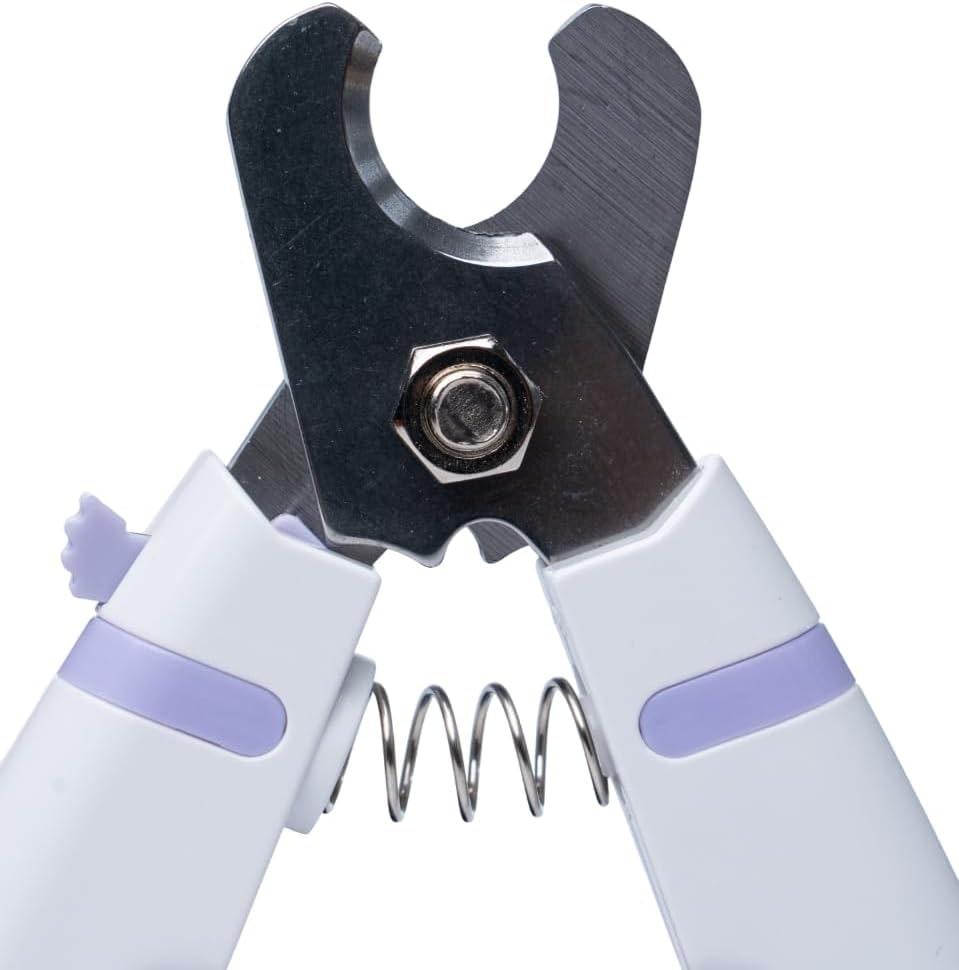
Japan Premium Pet
Japan Premium Pet Groomer Nail Clipper | Extra Sharp Stainless Steel Blades | Safe, Precise & Easy Trimming
View productIf you cut the quick
One-paw session
- Set up light, non-slip footing and treats.
- Handle one paw and identify the planned cutting line.
- Trim one very small slice from one nail.
- Reward and reassess the cut surface.
- Stop while the dog is still calm—even if other paws wait.
Frequently asked questions
How often should dog nails be trimmed?
Growth and natural wear vary. Check every few weeks and use stance, clicking and nail length as practical signals rather than a fixed calendar alone.
What about the dewclaws?
Dewclaws often do not touch the ground, so they may need separate and more frequent checks.
Can long nails be shortened to normal in one session?
The quick can extend with chronically long nails. Gradual, frequent trims are safer than trying to restore full length at once.
When should I stop and use a professional?
Stop if the dog panics, the nail is split or infected, anatomy is unclear, or previous attempts have caused significant fear.
Sources
- Zooplus — veterinarian-reviewed dog nail trimming guide — https://www.zooplus.de/magazin/hund/hundegesundheit-pflege/hundekrallen-schneiden
- RSPCA — dog nail care — https://www.rspca.org.uk/adviceandwelfare/pets/dogs/health/grooming
- VCA — trimming your dog’s nails — https://vcahospitals.com/know-your-pet/nail-trimming-in-dogs
- Japan Premium Pet nail-clippers category — https://japanpremium.eu/de/catalog?pets=dogs&subcats=dog-grooming-nail-clippers
Find the right care products
Compare Japan Premium Pet products selected for this routine.
View products