A normal process that needs a little help
In autumn many dogs and cats replace their lighter summer coat with a denser winter coat, and for a few weeks the hair seems to be everywhere. Seasonal shedding peaks in spring and autumn; dogs and cats that live mostly indoors often shed more evenly throughout the year. The most effective help is regular brushing with tools that suit the coat: several times a week, and daily at the peak for double-coated dogs and long-haired cats. Every hair you brush out does not end up on the sofa, and in cats it is not swallowed and brought up as a hairball. Shedding is not normal when it leaves bald patches or red, flaky skin, or comes with itching; then it is time for the vet. This guide shows what is normal and how to set up an easy routine.
Normal moult or something else?
| Sign | Normal moult | Better see a vet |
|---|---|---|
| Amount of hair | Lots of loose hair, especially undercoat, but the coat stays dense | Thinning coat, visible skin or bald patches |
| Pattern | Spread over the whole body | Symmetrical loss on both sides, patches, or loss in one spot such as under the collar |
| Skin | Normal colour, no scales or scabs | Redness, dandruff, scabs, greasy skin or an unusual smell |
| Itching | Little or none | Frequent scratching, licking or chewing |
| Timing | Spring and autumn, or a little all year in indoor animals | Sudden heavy hair loss after an illness, or together with other symptoms |
| General health | Lively, eats and drinks normally | Weight loss, tiredness, drinking much more than usual |
Why animals moult and what is normal
Hair grows in cycles. Old hairs are pushed out as new ones grow, so some shedding is part of every healthy coat. In animals that moult seasonally, the change is strongest in spring and autumn: in spring the thick winter coat is shed to keep cool, in autumn the lighter summer hair makes way for denser insulation. Breeds with a thick double coat, such as Shiba Inus, Huskies and Golden Retrievers, lose large amounts of undercoat, while breeds with continuously growing hair, such as Poodles, shed little but need regular clipping. Cats moult all year round to varying degrees, and indoor cats often lose a steady amount of hair every month. As long as the coat stays dense, the skin looks healthy and your animal does not scratch more than usual, even heavy shedding is just the natural replacement of the coat.
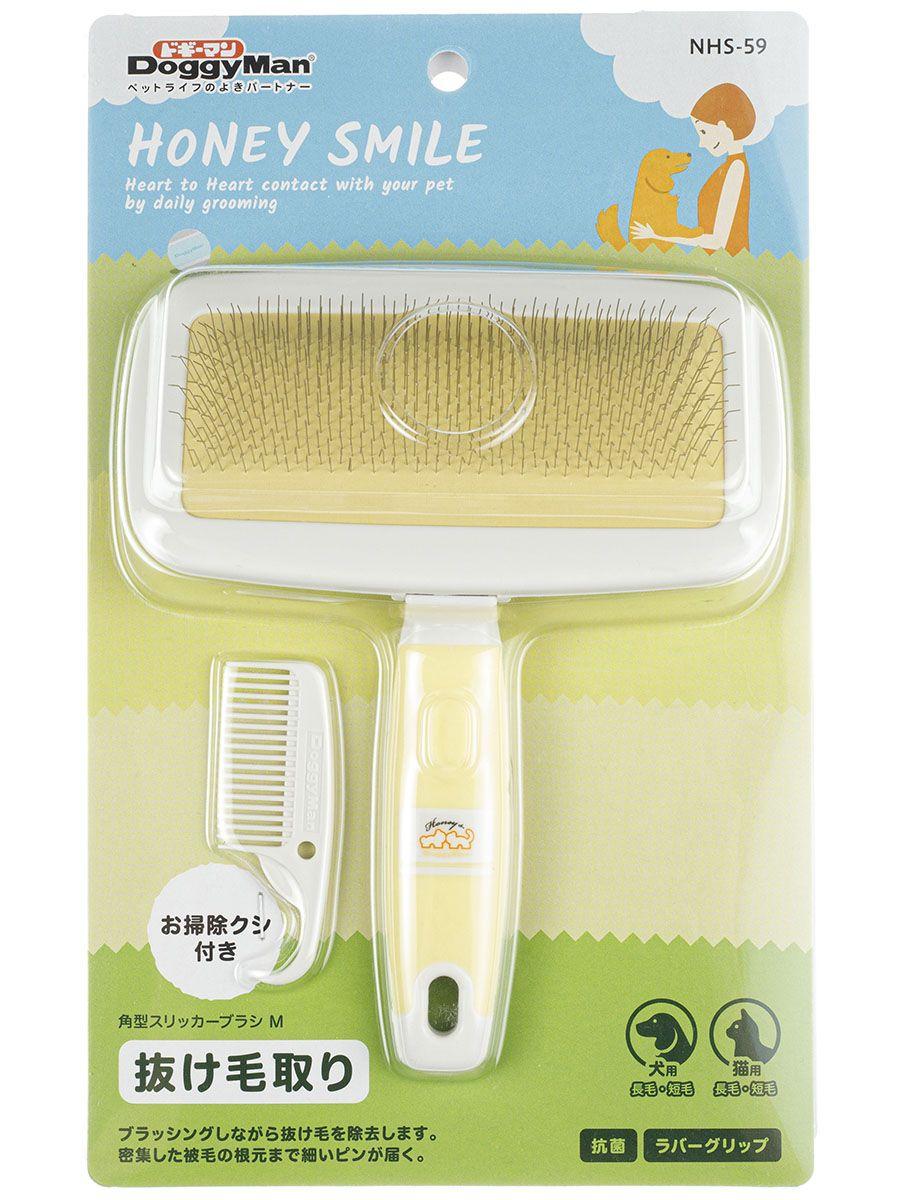
Slicker brush with plastic-tipped pins and comb for loose hair in medium to long coats
Japan Premium Pet
Slicker brush with plastic tips for shedding hair grooming of cats iand dogs in set with a comb. M size
View productBrushing technique that works
Brush in the direction of hair growth and work in sections. For dense or double coats, part the hair with one hand and brush from the skin outwards, layer by layer, so that you reach the loose undercoat close to the skin rather than only smoothing the surface. Use a slicker with light pressure: pressing hard can scratch the skin. An undercoat rake removes dead undercoat and small tangles in long and dense coats, and a comb at the end shows whether any knots are left. Veterinary advice for dogs is about five to ten minutes three to four times a week, and more often during the peak of the moult. For cats, daily grooming during the moult removes most of the loose hair before it is swallowed. Keep sessions short and positive, brush outdoors or on a towel, and do not shave a double-coated dog to stop shedding, because the coat protects against both cold and heat.
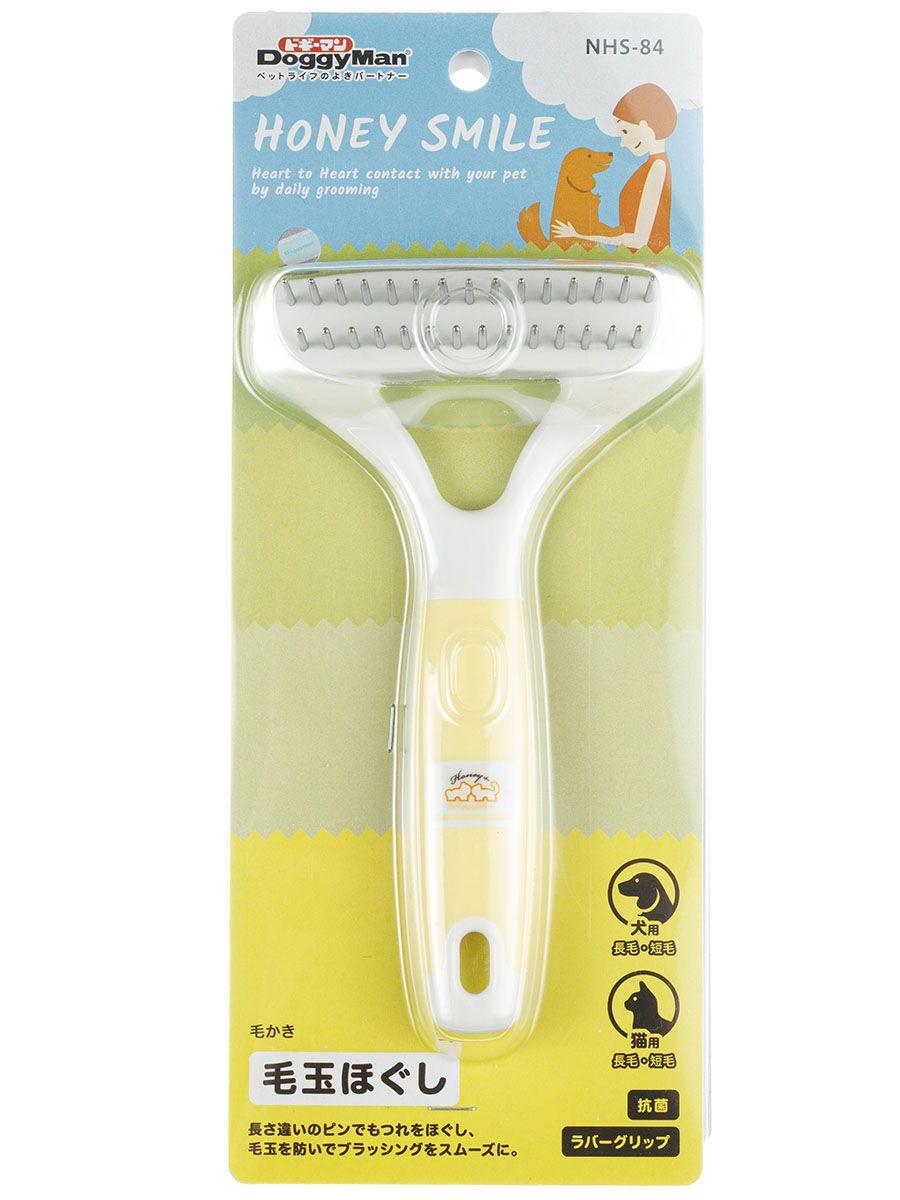
Double-level rake for dense undercoat and tangles in long coats
Japan Premium Pet
Specialized rake for combing tangles. Double-leveled. For long hair.For dogs and cats
View productHelp from the bowl, the bath and the bottle
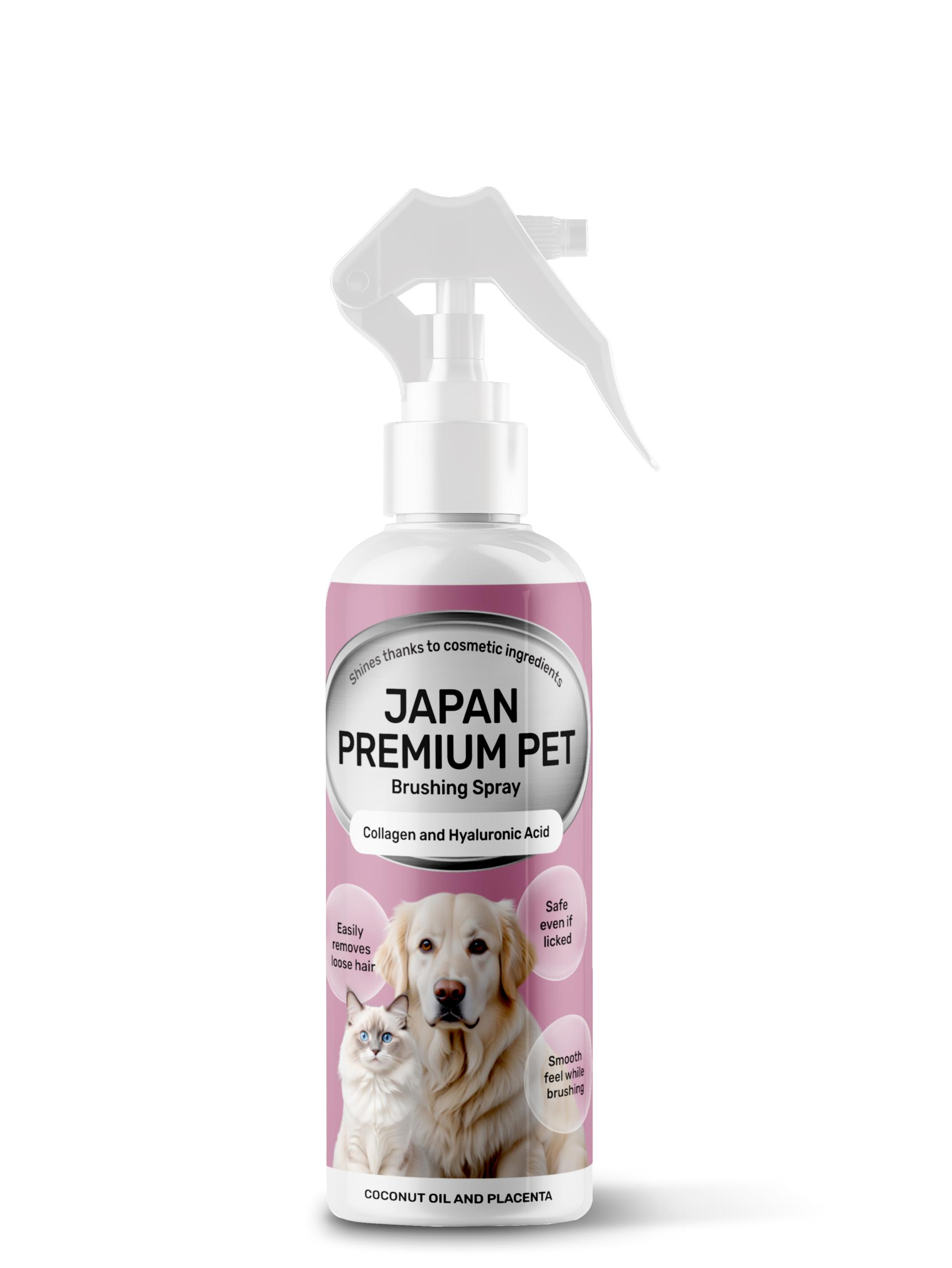
A shiny, resilient coat needs a complete diet with enough protein and essential fatty acids. Some vets recommend omega fatty acid supplements for dogs that shed excessively, so ask yours if the coat stays dull despite good food. For dogs, a bath with a mild dog shampoo during the moult helps to loosen dead undercoat; dry the coat thoroughly and brush afterwards, when the loose hair comes out easily. Most cats do not need bathing. In long or tangle-prone coats, a light mist of detangling spray before brushing makes combing easier, reduces static and helps prevent hair from breaking. At home, a regular vacuum, washable blankets on favourite sleeping places and a lint roller keep the moult under control.
Leave-in anti-tangle spray for easier combing of long and dense coats
Hair loss is not always moult
Your moulting routine in a few minutes a day
- Choose tools that suit the coat: slicker and comb for most coats, a rake for dense undercoat, a glove for short coats.
- Start each session with a quick look at ears, paws, belly and skin.
- Mist long or tangle-prone coats lightly with detangling spray.
- Brush in sections from the skin outwards, first with the slicker or rake, then check with the comb.
- Keep sessions short and positive and stop before your animal becomes restless.
- Brush outdoors or on a towel and clean the brush after each session.
- Repeat several times a week, and daily at the peak, until the old coat is out.
Frequently asked questions
How long does the autumn moult last?
Usually a few weeks, depending on breed, coat type and how much time your animal spends outdoors. Indoor animals often shed less intensively but over a longer period.
Should I bathe my dog during the moult?
A bath with a mild dog shampoo can help to loosen dead undercoat. Dry the coat thoroughly and brush afterwards. Cats rarely need a bath; brushing is enough.
Why does my indoor cat shed all year?
Cats moult all year round to varying degrees, and indoor cats live with stable light and temperature, so they often shed a steady amount instead of two clear moults.
Can I shave my double-coated dog to stop shedding?
This is not recommended. The double coat protects against cold, heat and sun, and it may grow back unevenly. Regular brushing with a rake and slicker is the better solution.
When is shedding a medical problem?
When you see bald patches, symmetrical hair loss, red or scaly skin, scabs or a lot of scratching, or when your animal also loses weight or seems unwell. Then the vet should look for parasites, allergies, infections or hormonal causes.
Sources
- Texas A&M School of Veterinary Medicine, Pet Talk — Brushing up for shedding season — https://vetmed.tamu.edu/news/pet-talk/reduce-dog-shedding/
- American Kennel Club — Dog shedding: what to expect and how to manage it — https://www.akc.org/expert-advice/health/dog-shedding-what-to-expect-and-how-to-manage-it/
- International Cat Care — Grooming your cat — https://icatcare.org/articles/grooming-your-cat
- Merck Veterinary Manual — Hair loss (alopecia) in dogs — https://www.merckvetmanual.com/dog-owners/skin-disorders-of-dogs/hair-loss-alopecia-in-dogs
- Japan Premium Pet dog care range — https://japanpremium.eu/de/categories/dog-care
Find the right care products
Compare Japan Premium Pet products selected for this routine.
View products