Two plants, one kind of joy, different odds
Catnip (Nepeta cataria) and matatabi, also called silver vine (Actinidia polygama), both make many cats rub, roll, lick and drool for a few minutes. The difference lies in the molecules: catnip relies mainly on nepetalactone, while silver vine contains a broader mix of iridoids, including nepetalactol. In a 2017 study of 100 domestic cats, about 68 percent responded to catnip and nearly 80 percent to silver vine, and most catnip non-responders reacted to silver vine. If your cat shrugs at catnip, matatabi is the logical next thing to try; if catnip already works, the two can be rotated.
Side by side
| Feature | Catnip | Matatabi (silver vine) |
|---|---|---|
| Plant | Nepeta cataria, mint family, Europe and Asia | Actinidia polygama, kiwi family, Japan and East Asia |
| Main active compounds | Nepetalactone | Nepetalactol and several other iridoids |
| Share of cats that respond | Roughly two thirds | Roughly three quarters or more in studies |
| Typical reaction | Rubbing, rolling, playfulness, then calm | Similar, often reported as more intense |
| Common formats | Dried leaves, toys, sprays | Sticks, powder from the fruit galls, sprays, toys |
| Kittens | Little or no response before about six months | The same |
What actually happens in the cat
Research from Japan and the United Kingdom has shown that iridoids activate the cat's opioid system: when cats sniffed silver vine, blood levels of beta-endorphin rose and the typical rubbing appeared; blocking the opioid receptors abolished the response. The same work found a practical side effect. Rubbing transfers iridoids onto the fur, and these compounds repel mosquitoes; cats that damage the leaves release even more of the active substances. In other words, the "high" looks like an inherited behaviour with a purpose, not a random quirk. It is not addiction: cats lose interest after a few minutes and usually need a break of roughly half an hour or more before they react again.
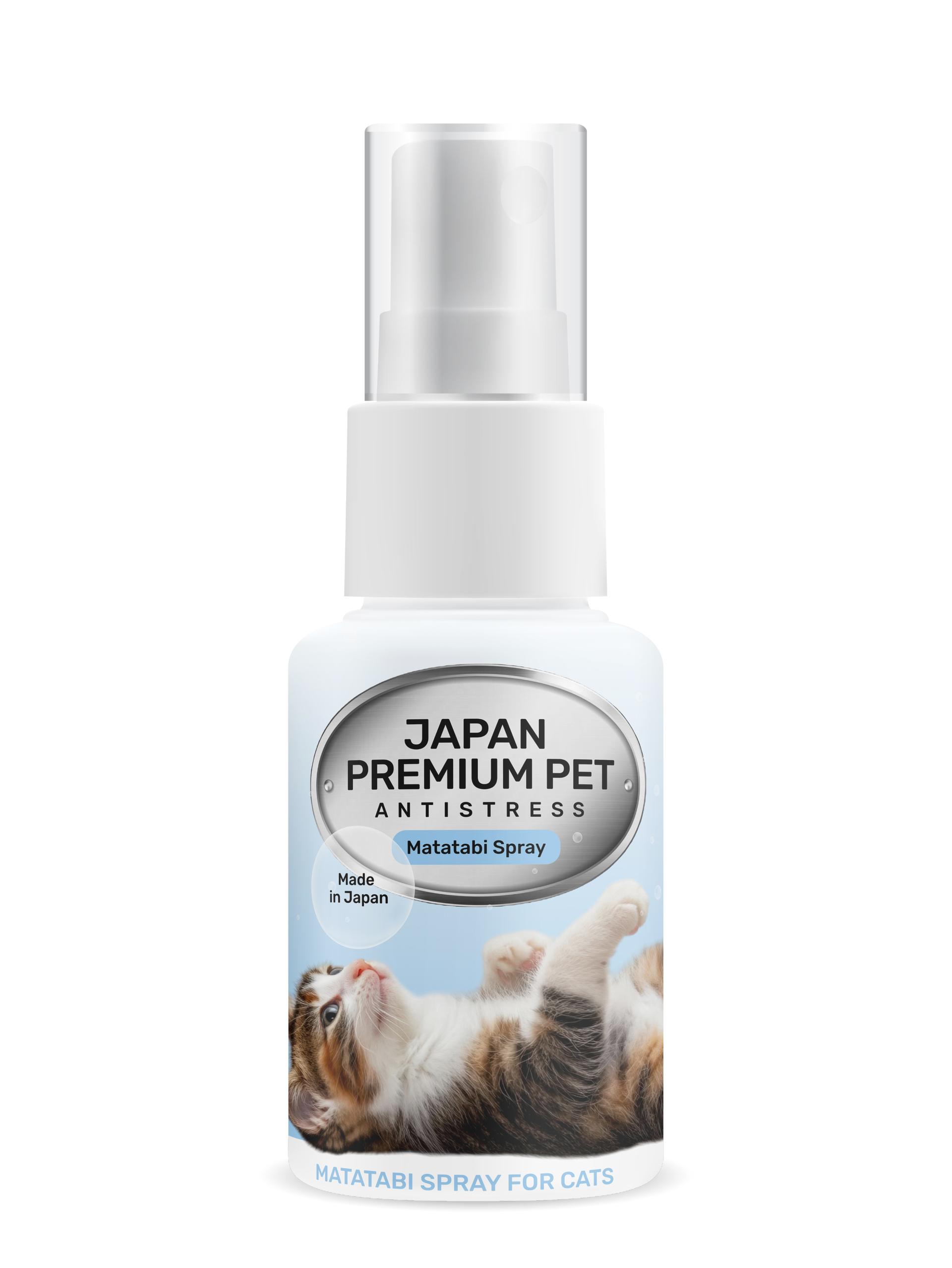
Matatabi spray for scratching posts, beds and toys
How to use matatabi for play and for calm
Offer a small amount and let the cat choose the distance. For play, rub a stick or sprinkle a pinch of powder on a favourite toy and start a session; a few minutes is enough. For calm, present matatabi in a quiet room after a stressful event, not during it, and give the cat space to rub and settle. To redirect scratching, spray or rub the compound on the scratching post you want the cat to use and leave the sofa alone. Keep sessions to a few times a week so the effect stays fresh, and store products closed and dry.
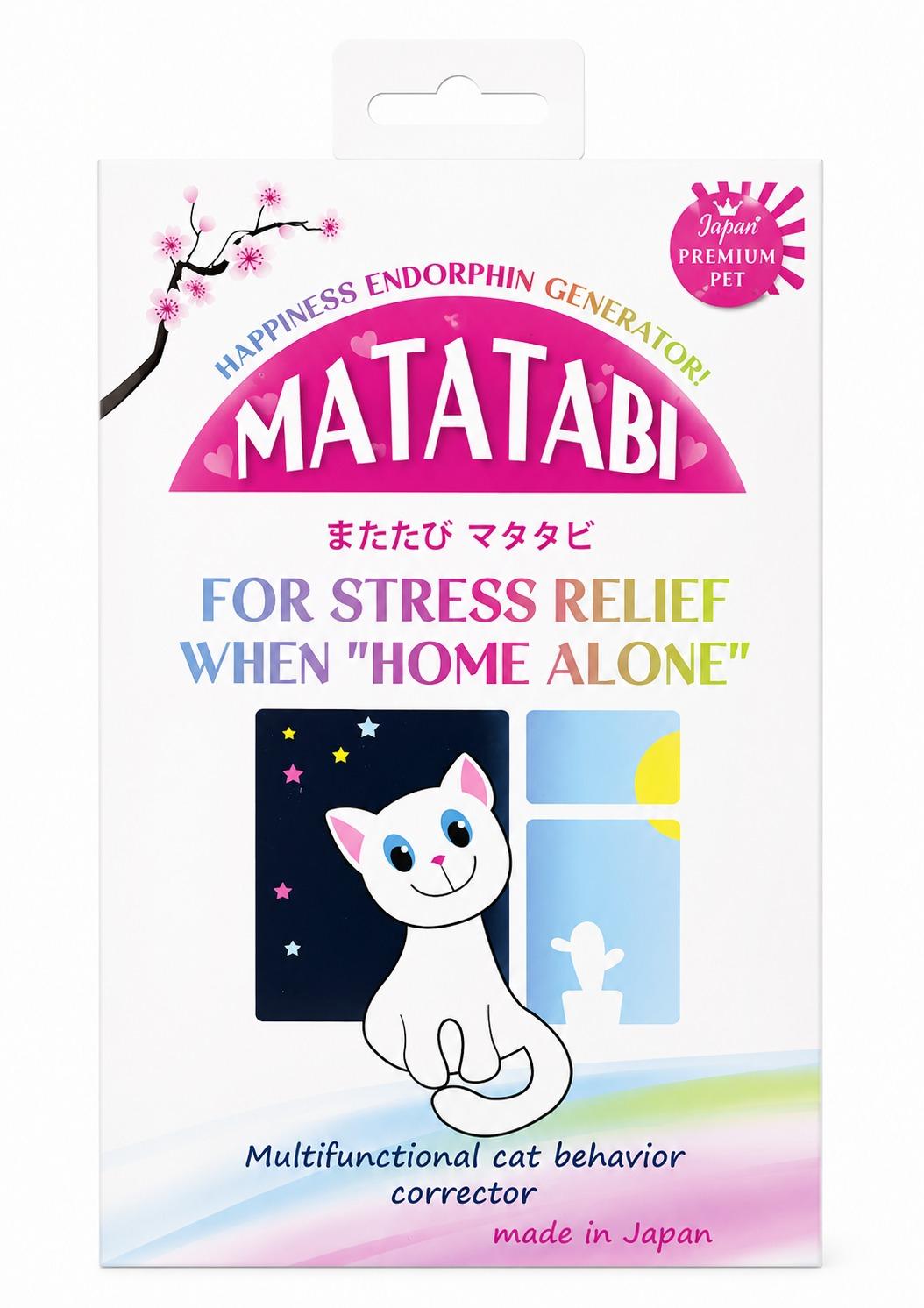
Matatabi powder for cats that stay home alone
Safety, limits and when to skip it
Both plants are considered safe for healthy adult cats in normal amounts; neither is toxic or habit-forming in the usual sense. A minority of cats become overexcited and may swat or nip if handled during the reaction, so let the cat finish on its own. Skip matatabi and catnip for kittens under about six months, who rarely respond anyway, and ask your veterinarian first if your cat has a seizure disorder, asthma or a chronic illness. Chewed sticks can splinter: supervise, replace frayed pieces and choose appropriately sized toys for small cats.
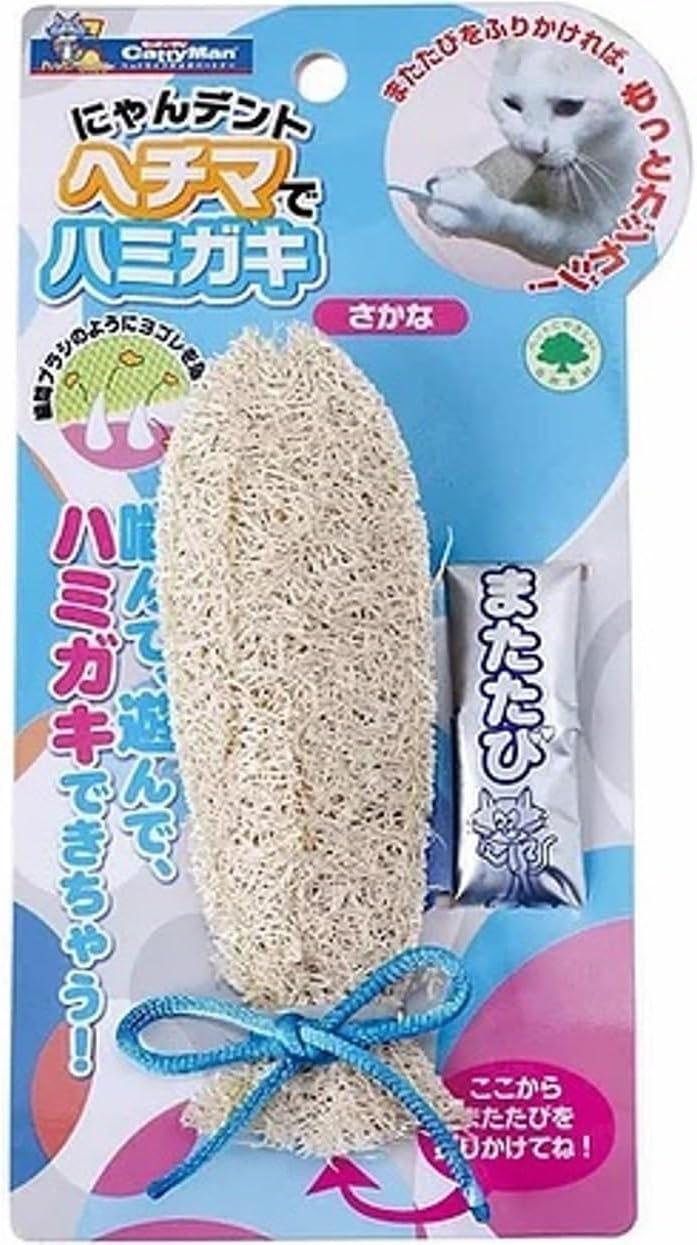
Loofah fish toy with matatabi for chewing and dental play
Japan Premium Pet
Natural loofah cat toy with Matatabi for deep dental cleaning and stress relief. Fish-shaped.
View productCatnip non-responder? Try this order
A first matatabi session, step by step
- Choose a calm moment when the cat is awake and relaxed.
- Apply a small amount to a toy or scratching post, not directly to the cat.
- Step back and let the cat approach and sniff on its own.
- Let the reaction run its course without picking the cat up.
- Put the item away after ten to fifteen minutes and wait a day before the next session.
Frequently asked questions
Is matatabi the same as silver vine?
Yes. Matatabi is the Japanese name of Actinidia polygama; in English it is usually called silver vine.
Can I give matatabi every day?
Daily use is not harmful, but the effect fades with constant exposure. Two or three short sessions a week keep it interesting.
Why does my cat get aggressive with catnip?
Some cats channel the excitement into play aggression. Use toys rather than your hands, keep sessions short and avoid catnip or matatabi before visitors or vet visits if it makes your cat rowdy.
Does matatabi help with stress?
It is not a medicine, but a short positive session can help a cat settle after a change such as a move or a new pet. Combine it with quiet retreats, routine and play.
Do dogs react to matatabi?
Dogs generally do not show the feline response. Matatabi products are designed for cats.
Sources
- Bol et al. — Responsiveness of cats to catnip, silver vine, Tatarian honeysuckle and valerian, BMC Veterinary Research 2017 — https://bmcvetres.biomedcentral.com/articles/10.1186/s12917-017-0987-6
- Uenoyama et al. — The characteristic response of domestic cats to plant iridoids allows them to gain chemical defense against mosquitoes, Science Advances 2021 — https://doi.org/10.1126/sciadv.abd9135
- Uenoyama et al. — Domestic cat damage to plant leaves containing iridoids enhances chemical repellency to pests, iScience 2022 — https://doi.org/10.1016/j.isci.2022.104455
- ASPCA Animal Poison Control — Catnip, non-toxic to cats — https://www.aspca.org/pet-care/animal-poison-control/toxic-and-non-toxic-plants/catnip
- Japan Premium Pet matatabi range — https://japanpremium.eu/de/categories/matatabi
Find the right care products
Compare Japan Premium Pet products selected for this routine.
View products