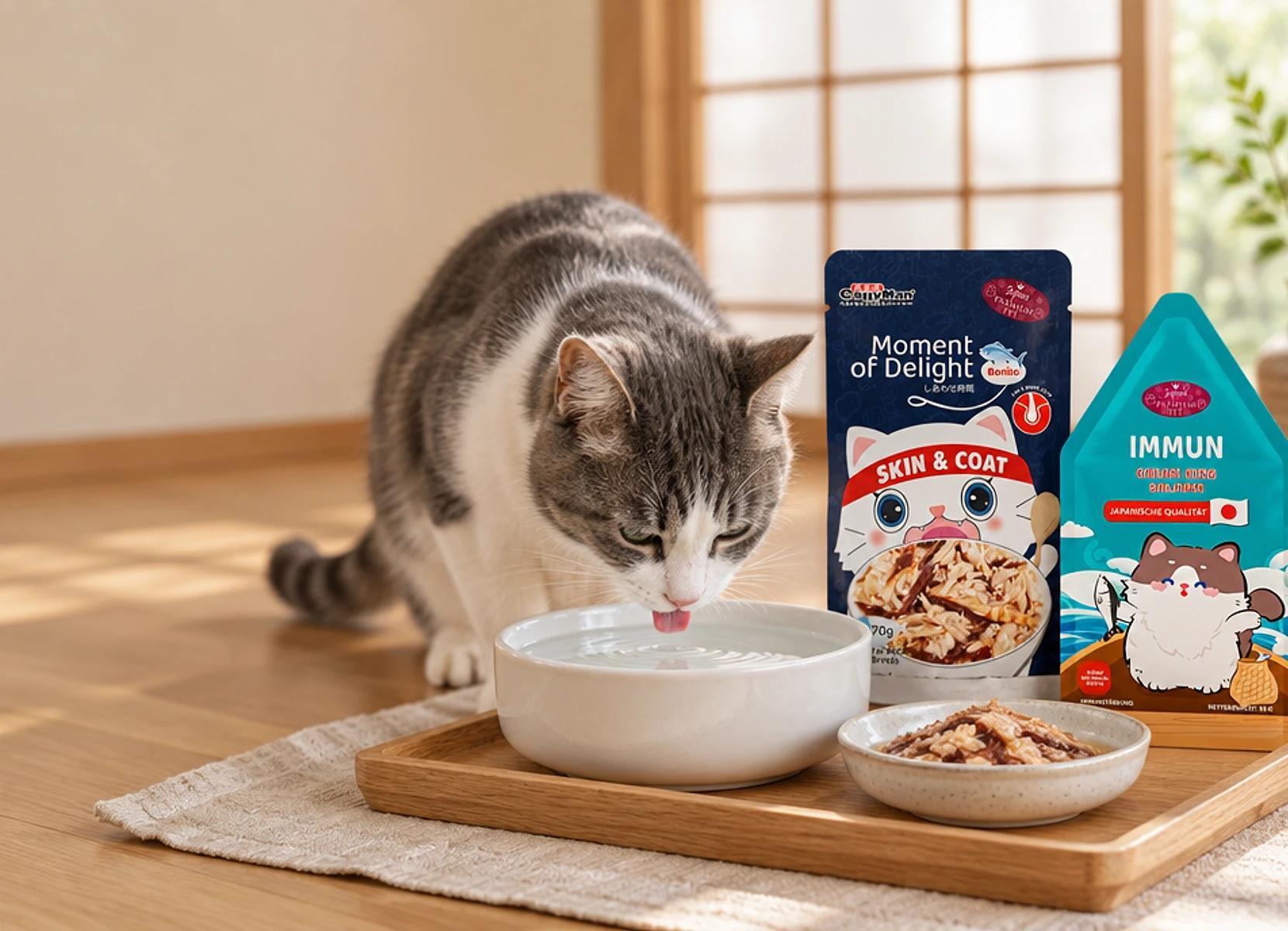
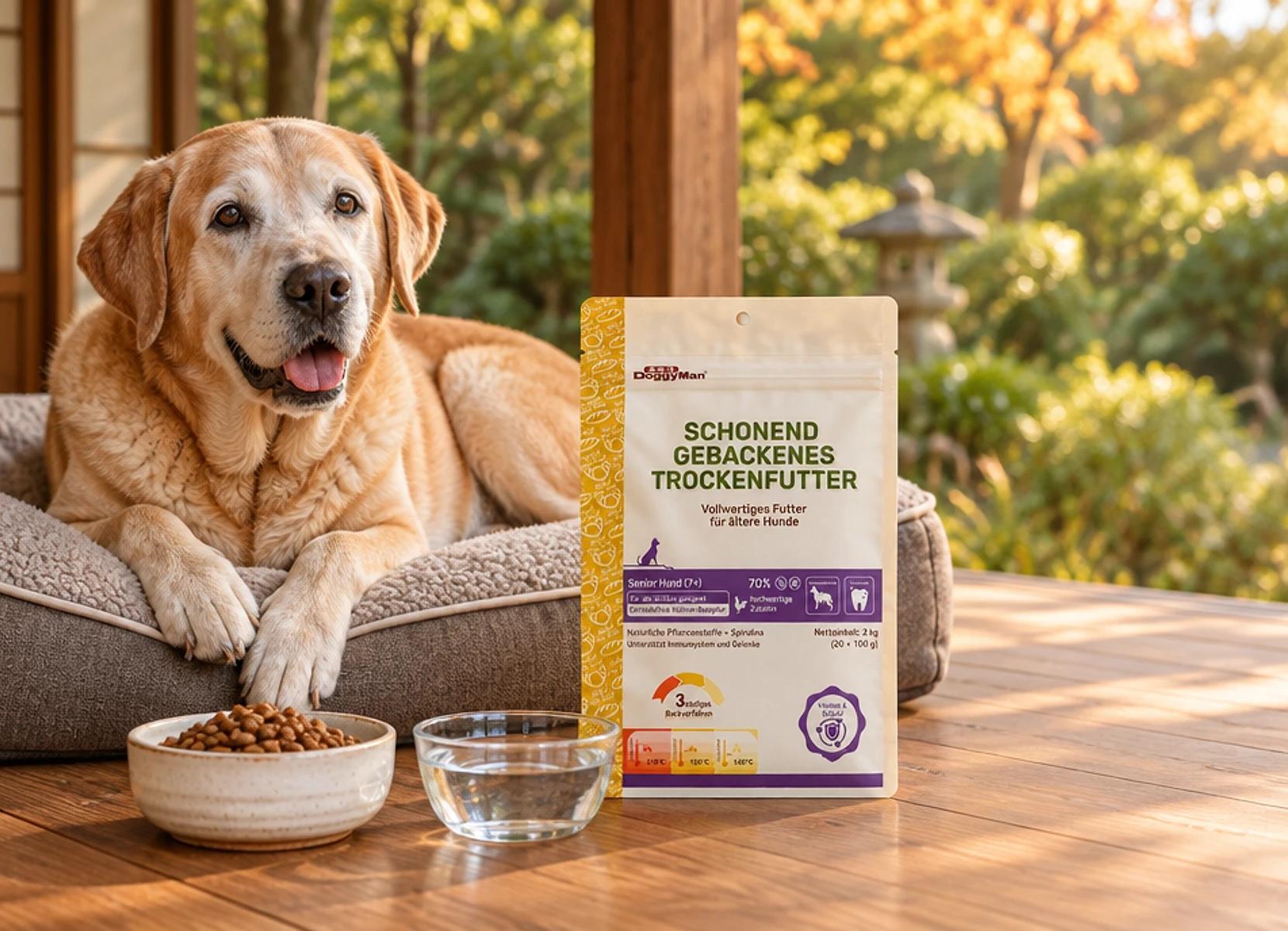
Older dogs need adjustments, not a different diet overnight
There is no fixed birthday on which a dog suddenly needs senior food. Veterinary guidelines describe the senior phase as roughly the last quarter of a dog’s expected lifespan, so large and giant breeds reach it earlier than small dogs. What changes is the individual dog. Many older dogs move less and need fewer calories, while others lose weight and muscle and need more energy and good-quality protein. Healthy older dogs do not need their protein restricted. The best basis is a complete food that suits your dog’s body condition, regular weighing, a vet check once or twice a year and small adjustments whenever teeth, joints or appetite change. This guide shows what to look at and how to make the changes.
What often changes in older dogs and how feeding can respond
| Change | What it can mean for feeding |
|---|---|
| Less activity, lower energy needs | Reduce portions in small steps if weight creeps up; a food with lower energy density and more fibre can help |
| Loss of muscle along the back and thighs | Ask your vet; a slightly higher protein content and quality can help to preserve muscle |
| Dental problems | Smaller or softer kibble, kibble soaked just before serving or a moist topper, plus a dental check |
| Stiff joints | A lean body weight relieves the joints; long-chain omega-3 fatty acids have the best evidence among supplements |
| Smaller appetite or pickiness | Smaller meals more often, food at room temperature, an aromatic topper; sudden loss of appetite needs a vet |
| Diagnosed illness such as kidney or heart disease | A veterinary diet chosen by your vet after diagnosis |
When is a dog a senior, and what does senior food mean?
Many dog foods use seven years as the starting point for senior food, which is a useful reminder but not a rule. A Great Dane may show signs of ageing at six, while a small terrier can be lively and lean well into its teens. The word senior on a bag is also not a defined standard. There is no official nutrient profile for older dogs, so senior foods only have to meet the requirements for adult dogs. A Tufts University study of almost 40 senior dog foods found that their calorie content ranged from 246 to 408 kcal per cup, and protein, fat and sodium varied just as widely. Compare the energy content per 100 grams and the protein level on the label instead of relying on the name, and choose the food that fits your dog’s weight, muscle and health.
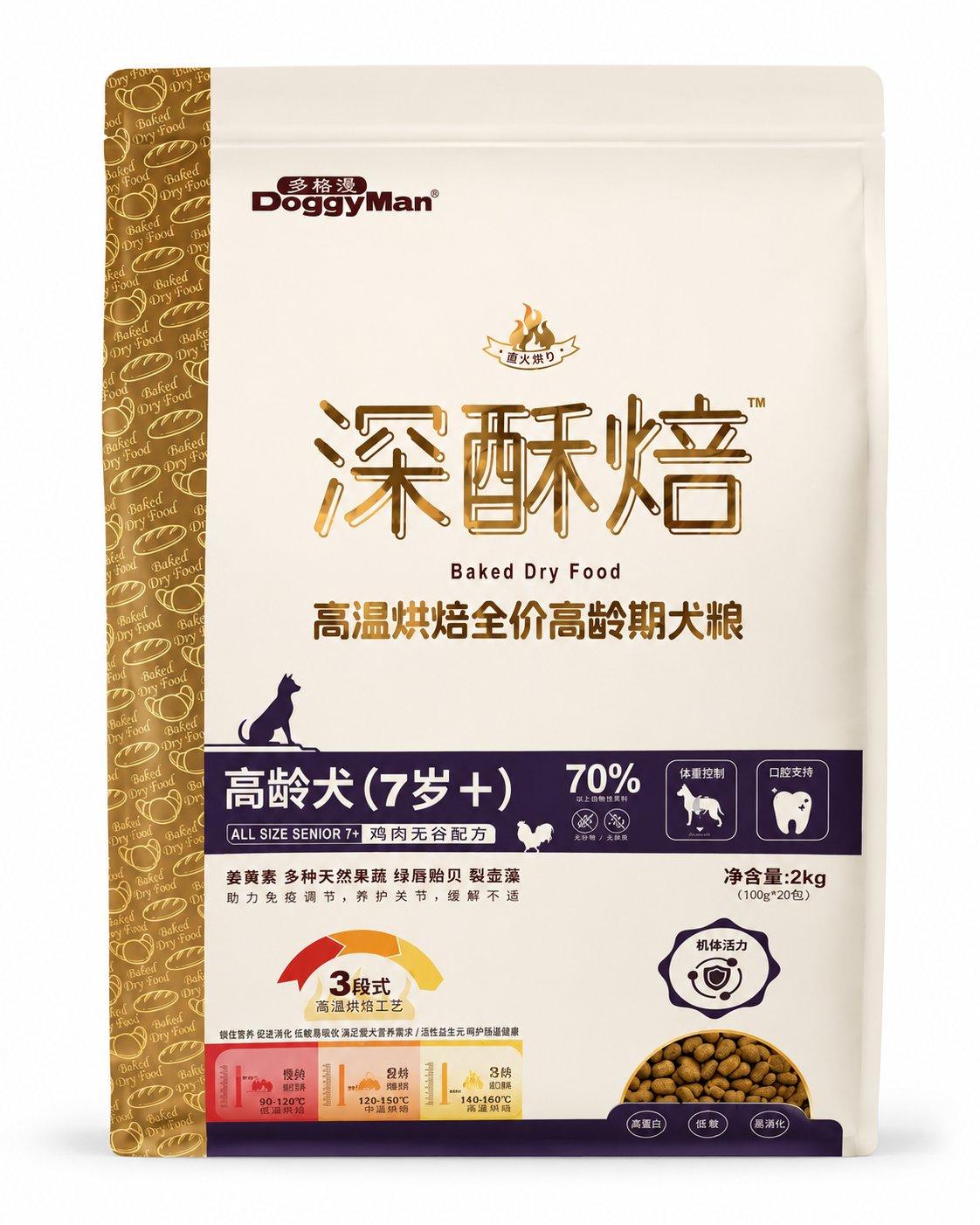
Oven-baked complete dry food for dogs aged seven and older
Calories, protein and body condition
Weight is only half the picture. Vets use a body condition score from 1 to 9, where the ideal is around 4 to 5: you can feel the ribs easily under a thin layer of fat and see a waist from above. A separate muscle condition score checks the muscles over the spine, shoulder blades and hips, because older dogs can lose muscle even when their weight stays the same. Keeping a dog lean pays off: in long-term research, dogs fed to stay slim lived longer than their heavier littermates. Weigh your dog once a month on the same scale, adjust portions by about five to ten percent at a time and weigh the dry food rather than using a cup. If your dog loses muscle, do not cut protein; ask your vet whether a food with more or better-quality protein is right. Treats and toppers should stay within about ten percent of the daily calories.
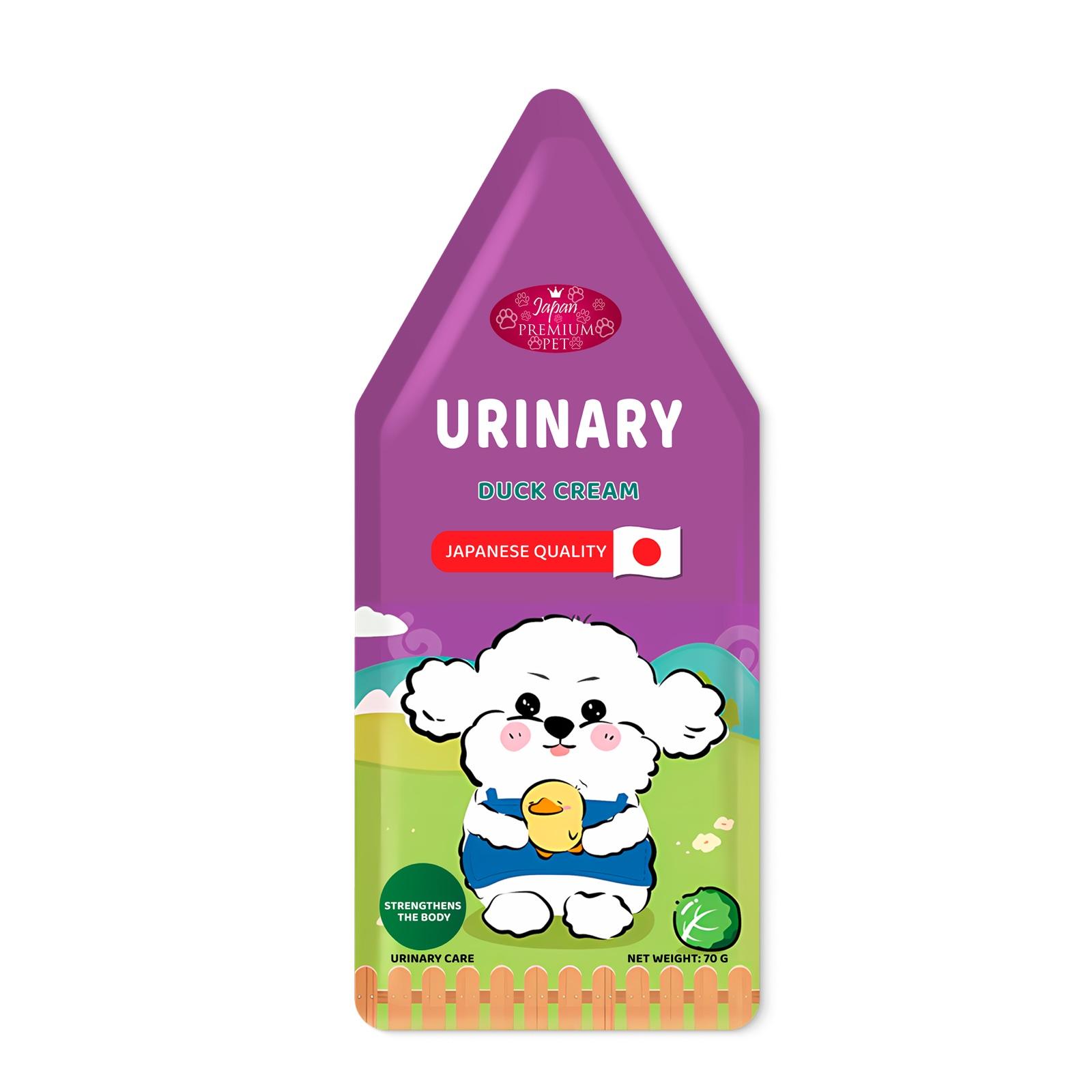
Soft duck and vegetable mousse as a topper for dogs that prefer moist food
Teeth, joints and mind: everyday adjustments
Dental disease is common in older dogs and can make eating painful, so a dog that chews carefully, drops food or prefers soft food should have its mouth examined. Until then, soaking kibble with lukewarm water just before serving or adding a soft topper makes meals easier. For stiff joints, a lean body weight is the most effective measure, together with shorter but more frequent walks and non-slip floors. Among supplements, long-chain omega-3 fatty acids from fish oil have the strongest evidence for dogs with arthritis; ask your vet about a suitable dose. Older dogs also benefit from mental work: sniffing games, food puzzles and calm handling. A relaxed massage or grooming session once or twice a week strengthens the bond and is a good moment to feel for new lumps, sore spots or changes in the coat.
Massage roller set for calm grooming and hands-on checks with older dogs

Weight loss in an older dog needs a vet
Switching an older dog to a new food
- Have your dog weighed and its body and muscle condition assessed before you change anything.
- Compare the energy content per 100 grams on the labels, not just the word senior.
- Choose a complete food for adult or senior dogs that suits your dog’s size.
- Switch over seven to ten days by mixing increasing amounts of the new food into the old one.
- Work out the daily amount from the feeding guide and your dog’s target weight, then weigh the portions.
- Split the ration into two or three meals if your dog eats slowly or has a sensitive stomach.
- Count treats and toppers within about ten percent of the daily calories.
- Weigh your dog again after four weeks and adjust the portion in small steps.
Frequently asked questions
From what age does my dog need senior food?
There is no fixed age. Large breeds often age earlier than small ones. Switch when your dog’s activity, weight, muscle or teeth change, ideally after a check-up, and choose the food by its nutrient content rather than by the label.
Should older dogs eat less protein?
Not if they are healthy. Veterinary guidelines state that healthy senior dogs do not need protein restriction, and many older dogs benefit from good-quality protein to preserve muscle. Protein is only adjusted when the vet diagnoses a condition such as advanced kidney disease.
My old dog is getting thinner. What should I do?
Have the cause checked by your vet first. If your dog is healthy, a more energy-dense food, smaller and more frequent meals and an aromatic topper can help it keep its weight and muscle.
Can I soak dry food for a dog with bad teeth?
Yes. Soak the kibble with lukewarm water just before serving and remove leftovers after a short time. At the same time, have the teeth examined, because dental pain is a common reason for eating less.
Does my senior dog need supplements?
A complete food covers the basic needs. For dogs with joint problems, omega-3 fatty acids from fish oil have the best evidence. Discuss the dose with your vet, especially if your dog takes medication.
Sources
- American Animal Hospital Association — 2023 AAHA Senior Care Guidelines for Dogs and Cats — https://www.aaha.org/globalassets/02-guidelines/2023-aaha-senior-care-guidelines-for-dogs-and-cats/resources/2023-aaha-senior-care-guidelines-for-dogs-and-cats.pdf
- Tufts University — Wide variety in nutritional content found in “senior” dog foods — https://now.tufts.edu/2011/03/16/wide-variety-nutritional-content-found-senior-dog-foods
- World Small Animal Veterinary Association — Body Condition Score (dog) — https://wsava.org/wp-content/uploads/2020/01/Body-Condition-Score-Dog.pdf
- World Small Animal Veterinary Association — Muscle Condition Score (dogs) — https://wsava.org/wp-content/uploads/2020/01/Muscle-Condition-Score-Chart-for-Dogs.pdf
- Nutrition Research Reviews — Exploring the efficacy and optimal dosages of omega-3 supplementation for companion animals — https://www.cambridge.org/core/journals/nutrition-research-reviews/article/exploring-the-efficacy-and-optimal-dosages-of-omega3-supplementation-for-companion-animals/118271BA20C2863CF770CB7960145015
- Japan Premium Pet dog nutrition range — https://japanpremium.eu/de/categories/dog-nutrition
Explore the nutrition range
Compare the Japan Premium Pet foods and treats selected for this guide.
View products