The 10 percent rule: treats and chews share one small budget
Treats, chews and dental sticks together should make up no more than about ten percent of your dog’s daily calories; the rest comes from a complete main food. How many chews that allows depends on the size of the dog and the calories in each product, not on one fixed number. Veterinary nutritionists give an example: a dog of about 4.5 kilograms needs roughly 300 kcal a day, which leaves only about 30 kcal for all treats. One dental stick plus a few training rewards can therefore fill a small dog’s budget. Count every chew, reduce the main meal slightly on days with more treats, choose a size that suits the dog’s mouth and always supervise chewing.
How to work out your dog’s treat budget
| Step | What to do | Tip |
|---|---|---|
| 1. Daily energy | Estimate daily calories with your vet or the feeding guide of the main food | Needs vary with age, neutering, activity and body condition |
| 2. Treat budget | Take about ten percent of that figure | Example: about 300 kcal a day leaves about 30 kcal for treats |
| 3. Per piece | Check the energy per piece or per 100 g on the pack | If no value per piece is given, weigh one piece once and calculate |
| 4. Plan the day | Split the budget between chews and training rewards | Break larger treats into small pieces for training |
| 5. Adjust | Reduce the main meal slightly on treat-heavy days and check weight regularly | Kibble from the daily ration also works as a reward |
Choosing the right size and texture
A chew should be too large to fit entirely into your dog’s mouth or to be swallowed whole, and it should match the way your dog chews. For hard chew items, veterinary guidance uses a simple test: you should be able to dent the surface with a fingernail, because rock-hard items such as bones, antlers or hooves can break teeth. Edible dental chews are usually sized by body weight; if your dog is between sizes or tends to gulp, choose the larger one. Smaller dogs are at higher risk of a blockage if they swallow large pieces, and a strong chewer needs a sturdier product than a gentle nibbler. Read and follow the label, and count every chew within the daily treat budget.
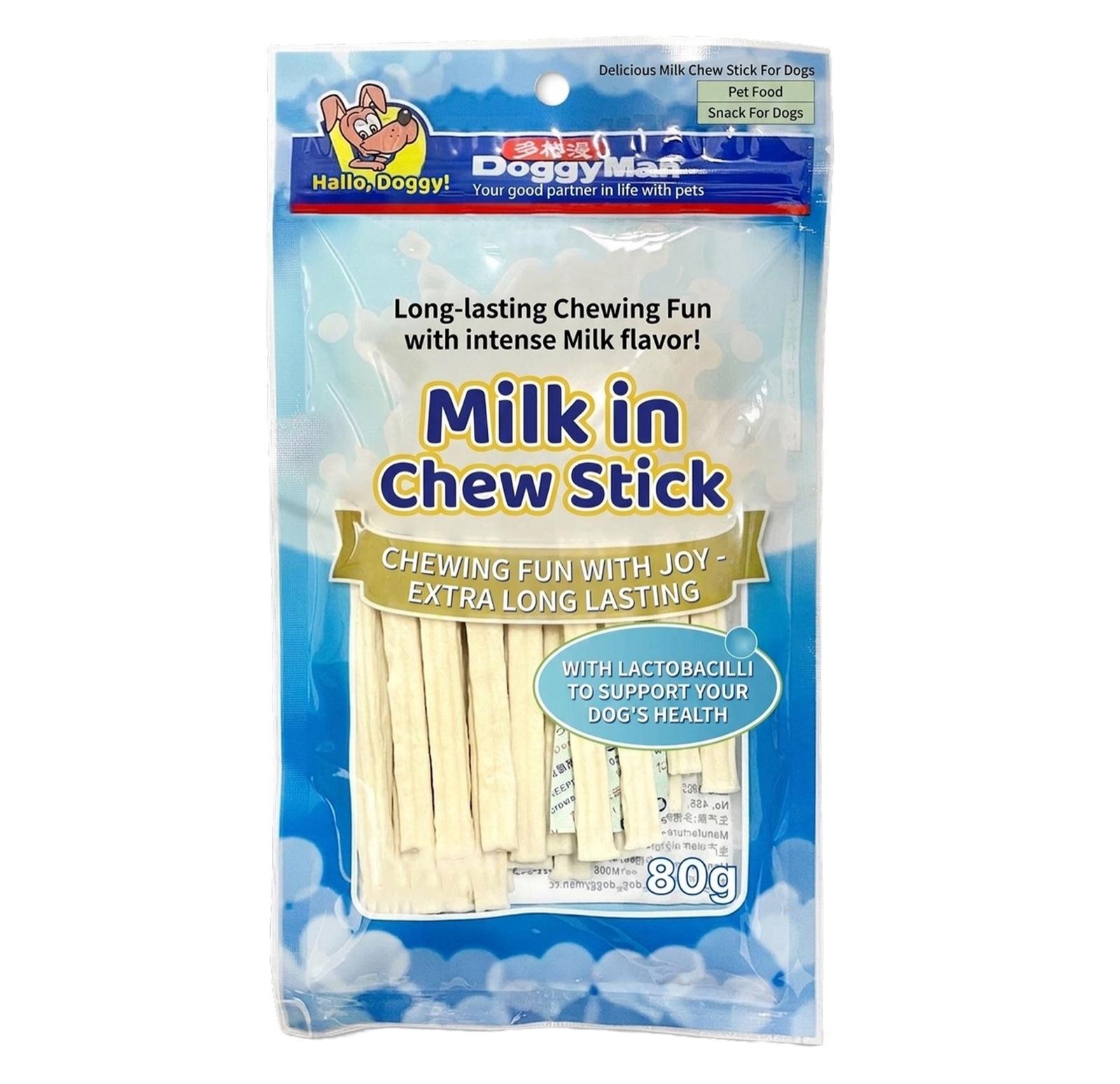
Milk dental sticks, size S, for small and medium-sized dogs
Supervision: the rule that prevents emergencies
Stay nearby whenever your dog has a chew. Take it away if the dog bites off large chunks, tries to swallow the last piece whole or starts guarding it, and throw away chews that have become small enough to swallow. In homes with more than one dog, give chews in separate rooms or crates, because competition makes dogs gulp. Swallowed chunks can cause choking or an intestinal blockage that may need surgery, so it is worth knowing the warning signs listed below. Ask your vet which chews suit puppies, older dogs with sensitive teeth and dogs recovering from dental treatment. A calm chewing session after a walk is often more enjoyable for the dog than many small snacks throughout the day.
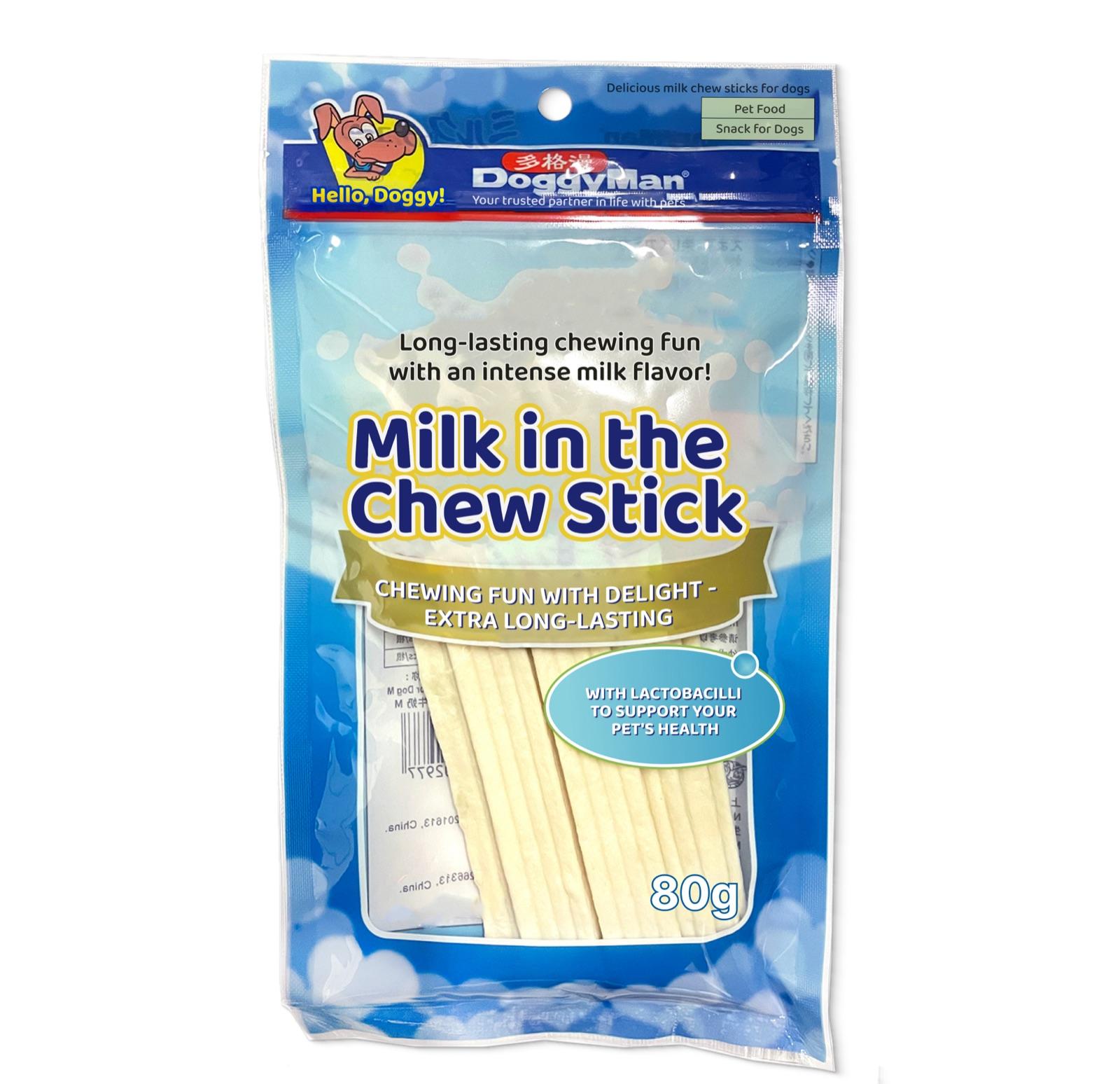
Milk dental sticks, size M, for medium and large dogs
What dental chews can and cannot do
Chewing helps: products that keep a dog chewing for a while can reduce plaque on the back teeth, where most chewing happens. Veterinary dental guidelines are clear about the limits, though. Chews are a passive form of home care that largely misses the front teeth and canines, and passive care alone cannot keep the gums healthy. Daily tooth brushing remains the gold standard, and the best results come from combining brushing with suitable chews and regular dental checks at the vet. If you want a product with tested dental claims, look for the Veterinary Oral Health Council seal. Plain baked biscuits and rope toys have not been shown to prevent periodontal disease. Bad breath, red gums or brown tartar call for a dental examination, not more chews.
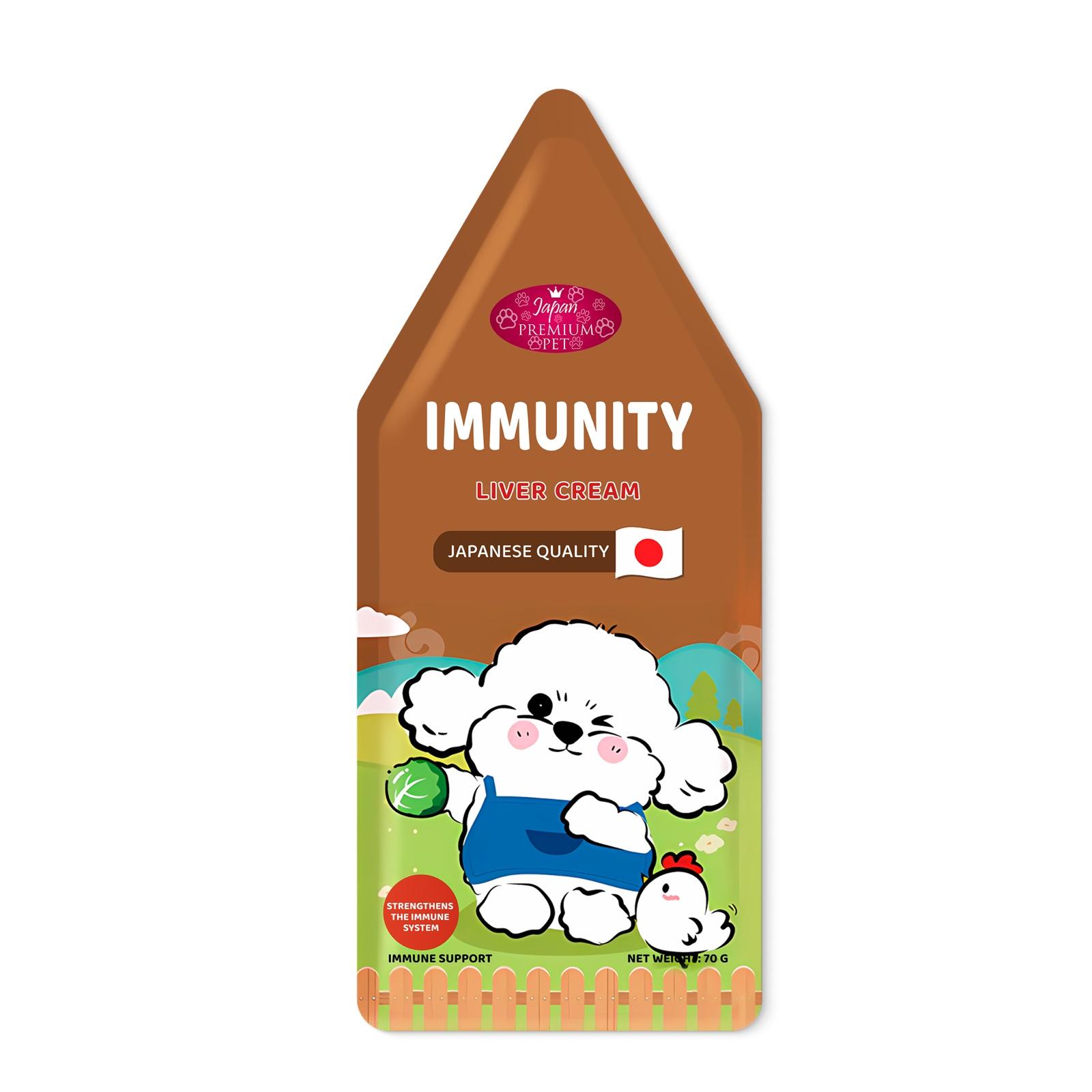
Soft chicken liver and vegetable mousse for small training rewards
Stop and call the vet
A safe daily treat plan in six steps
- Estimate your dog’s daily calories with your vet or the main food’s feeding guide.
- Set aside no more than about ten percent of them for all treats and chews.
- Choose a chew size that cannot fit entirely into your dog’s mouth.
- Give the chew in a quiet place and stay nearby until it is finished or put away.
- Use small treat pieces or kibble from the daily ration for training.
- Check weight or body condition every few weeks and adjust the plan.
Frequently asked questions
How many dental sticks can my dog have per day?
There is no single number for every dog. Follow the feeding guide on the pack as the maximum, check the calories per stick and make sure all treats together stay within about ten percent of daily calories. On days with a dental stick, give fewer other treats or slightly less main food.
Do training treats count toward the ten percent?
Yes. Everything outside the main food counts: training rewards, chews, dental sticks, toppers and table scraps. Tiny pieces keep the calories down during long training sessions.
Can dental chews replace brushing?
No. Chews can help on the back teeth, but brushing is the gold standard of home dental care and reaches the front teeth that chewing misses. Combine both and keep up regular dental checks at the vet.
Are chews suitable for puppies?
Choose products labelled for the puppy’s age and size, supervise every session and remove small leftovers. Ask your vet if you are unsure, especially while the baby teeth are changing.
My dog swallows chews almost whole. What should I do?
Choose a larger size or a different type, hold the end of the chew while your dog nibbles and take it away before the last piece is small enough to swallow. If your dog keeps gulping chews, ask your vet or a trainer for safer alternatives.
Sources
- Tufts Cummings School of Veterinary Medicine, Petfoodology — Treat options for dogs and cats without unbalancing their diet — https://sites.tufts.edu/petfoodology/2021/10/21/treat-options-for-dogs-and-cats-without-unbalancing-their-diet/
- World Small Animal Veterinary Association — Global Dental Guidelines — https://wsava.org/wp-content/uploads/2020/01/Dental-Guidleines-for-endorsement_0.pdf
- Veterinary Oral Health Council — VOHC Accepted Products — https://vohc.org/accepted-products/
- VCA Animal Hospitals — How to choose the best chew toy for your dog — https://vcahospitals.com/resources/lifestyle-dog/supplies/how-to-choose-the-best-chew-toy-for-your-dog
- ASPCA — Position Statement on Dog Chews and Treats — https://www.aspca.org/about-us/aspca-policy-and-position-statements/position-statement-dog-chewstreats
- Texas A&M College of Veterinary Medicine, Pet Talk — How to choose the best dog chew toys — https://vetmed.tamu.edu/news/pet-talk/how-to-chews-the-best-dog-chew-toys/
- Japan Premium Pet dog nutrition range — https://japanpremium.eu/de/categories/dog-nutrition
Explore the nutrition range
Compare the Japan Premium Pet foods and treats selected for this guide.
View products