Odour returns when part of the source remains
Cat urine odour is often difficult because liquid spreads farther than the visible spot and can soak into seams, grout, upholstery or underlay. The reliable approach is methodical: locate the full area, blot fresh liquid, check the surface instructions, apply enough suitable cleaner to reach the same depth, allow the stated contact time and let the area dry before judging the result. Adding a stronger fragrance does not prove that the source has been removed.
Match the method to the surface
| Surface | First action | Main caution |
|---|---|---|
| Litter tray and washable plastic | Empty, wash as directed and dry before refilling | Avoid combining cleaners or leaving strong residue |
| Sealed hard floor | Blot, test the cleaner and treat edges and joints | Do not flood seams or unsealed wood |
| Upholstery or carpet | Blot, check care label and treat to contamination depth | Over-wetting can spread liquid into backing |
| Bedding or washable textile | Rinse cool and follow fabric/product instructions | Heat can set odour before the stain is removed |
| Unsealed wood or porous stone | Blot immediately | Professional surface advice may be safer |
Step one: find the real boundary
Use your nose close to the surface only after ventilation, inspect seams and check the reverse side of removable covers. Under ultraviolet light some residues may fluoresce, but so can detergents and other materials, so a glow is a clue rather than proof. Mark the perimeter lightly and treat beyond the obvious centre. If the smell is strongest after humidity rises, residue may be deeper than the surface.
Step two: read the active claim, not just the scent
Odour-control products work in different ways. Some are designed for the litter tray and use deodorising ingredients such as tea catechin; others are intended for washable home surfaces. Use only the surfaces and species stated on the label. Do not call a product enzymatic unless its ingredient or manufacturer documentation says so. Never mix disinfectants, chlorine products, acids or ammonia-based cleaners.
Tea-catechin odour control for the cat toilet area

Green-tea home spray for label-approved surfaces
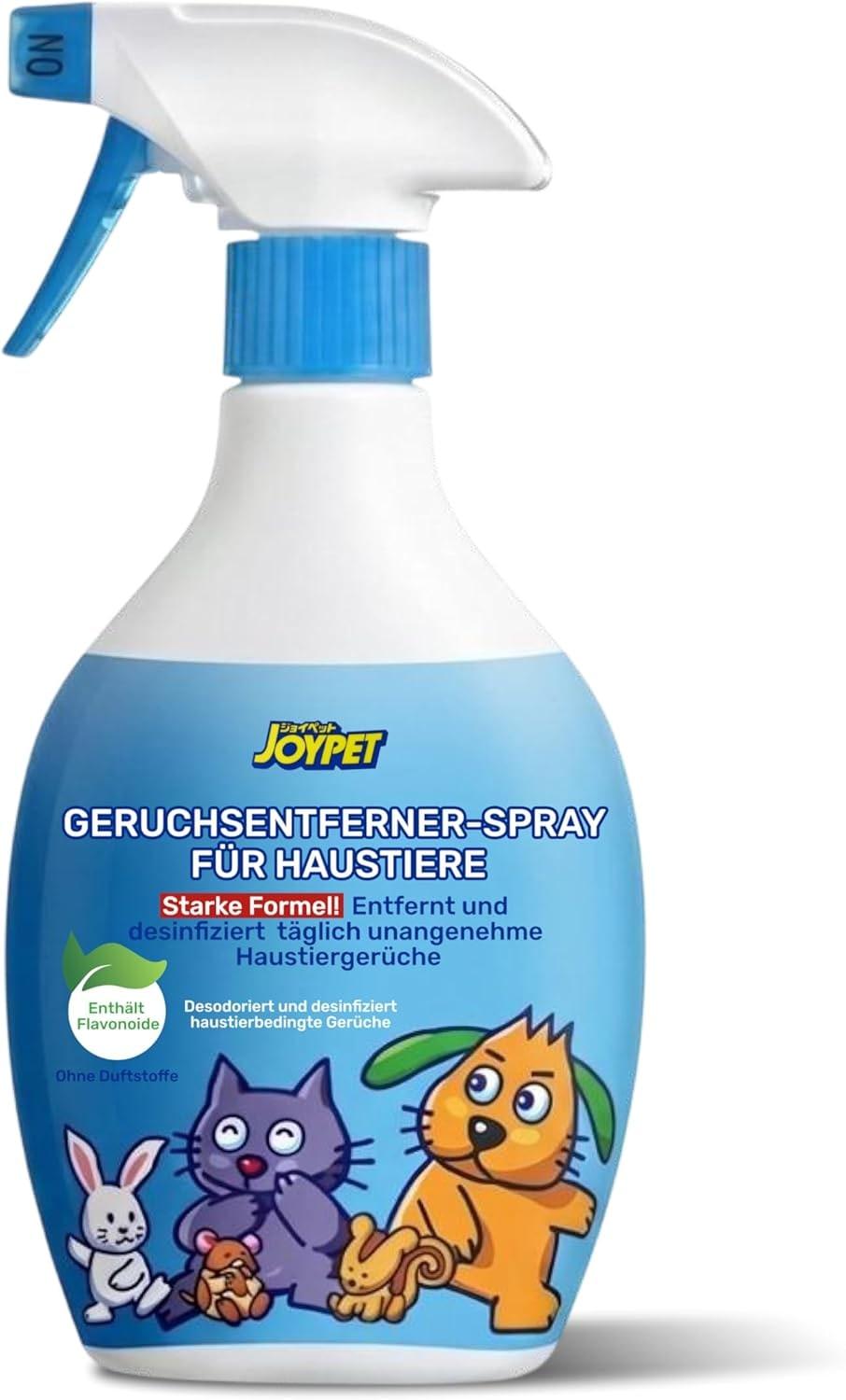
Japan Premium Pet
Japan Premium Pet Deodorizing & Disinfecting Spray with Green Tea Extract | Odor Eliminator for Dogs, Cats & Small Animals | Safe for Licking | Litter Boxes & Cages | 400 ml
View productStep three: remove the behavioural trigger too
Cleaning is only half the solution when urination happens outside the tray. Pain, urinary disease, stress, tray location, substrate dislike, conflict with another cat or an unclean tray can all contribute. Sudden house-soiling deserves veterinary attention, especially with frequent small urinations, straining, blood, vocalisation or licking around the urinary opening.
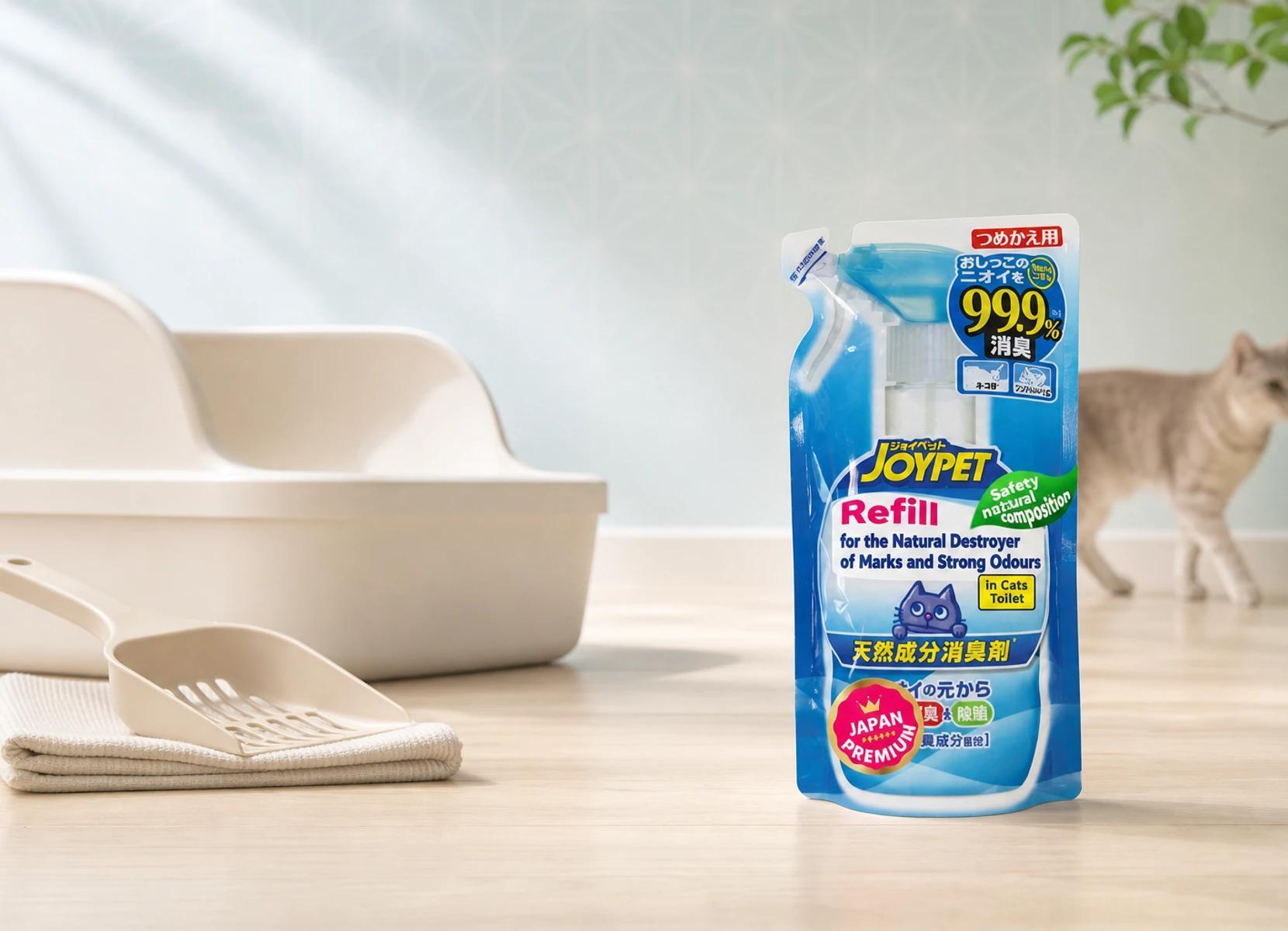
Refill for an established cat-toilet odour routine
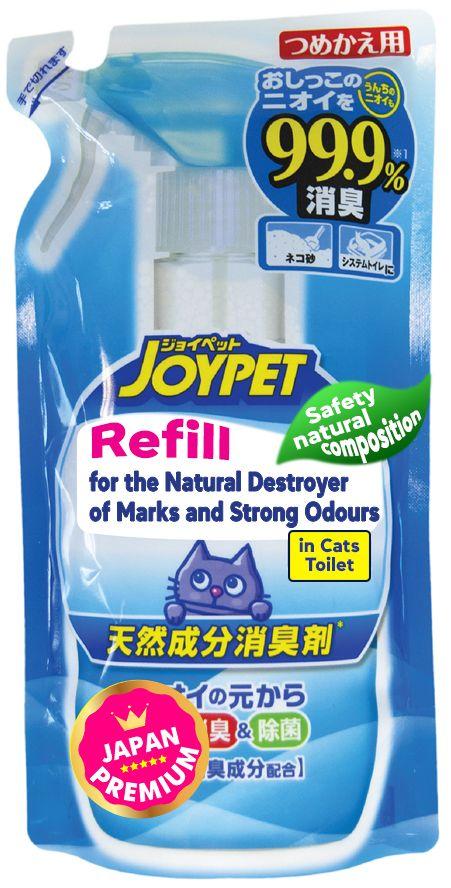
Japan Premium Pet
refill for the natural destroyer of marks and foul odors in cats toilet, 240 mL
View productStraining can be an emergency
Clean-up checklist
- Ventilate and keep pets away from the wet area.
- Blot fresh liquid; do not scrub it wider.
- Check the fabric or surface care instructions.
- Test the product in an inconspicuous place.
- Apply for the full label contact time.
- Dry completely and reassess before repeating.
Frequently asked questions
Why does the smell return after cleaning?
Residue may remain below the visible surface, or the area may not have stayed wet for the cleaner’s required contact time.
Can I use bleach on cat urine?
Avoid improvised chemical combinations. Bleach can damage materials and must never be mixed with ammonia or acids. Use a product intended for the surface and follow its label.
Does odour remover stop marking?
Removing residual odour can remove one cue, but marking can also reflect stress, territory, medical problems or litter-tray setup.
When should inappropriate urination be checked by a vet?
Any sudden change, pain, blood, straining, frequent small urinations or inability to pass urine requires prompt veterinary assessment.
Sources
- Cornell Feline Health Center — feline house soiling — https://www.vet.cornell.edu/departments-centers-and-institutes/cornell-feline-health-center/health-information/feline-health-topics/house-soiling
- AAFP/ISFM — feline house-soiling guidelines — https://journals.sagepub.com/doi/10.1177/1098612X14539092
- ASPCA — urine marking in cats — https://www.aspca.org/pet-care/cat-care/common-cat-behavior-issues/urine-marking-cats
- Japan Premium Pet odour-control category — https://japanpremium.eu/de/catalog?pets=cats&subcats=cat-toilet-odor-control-odor-spray
Find the right care products
Compare Japan Premium Pet products selected for this routine.
View products