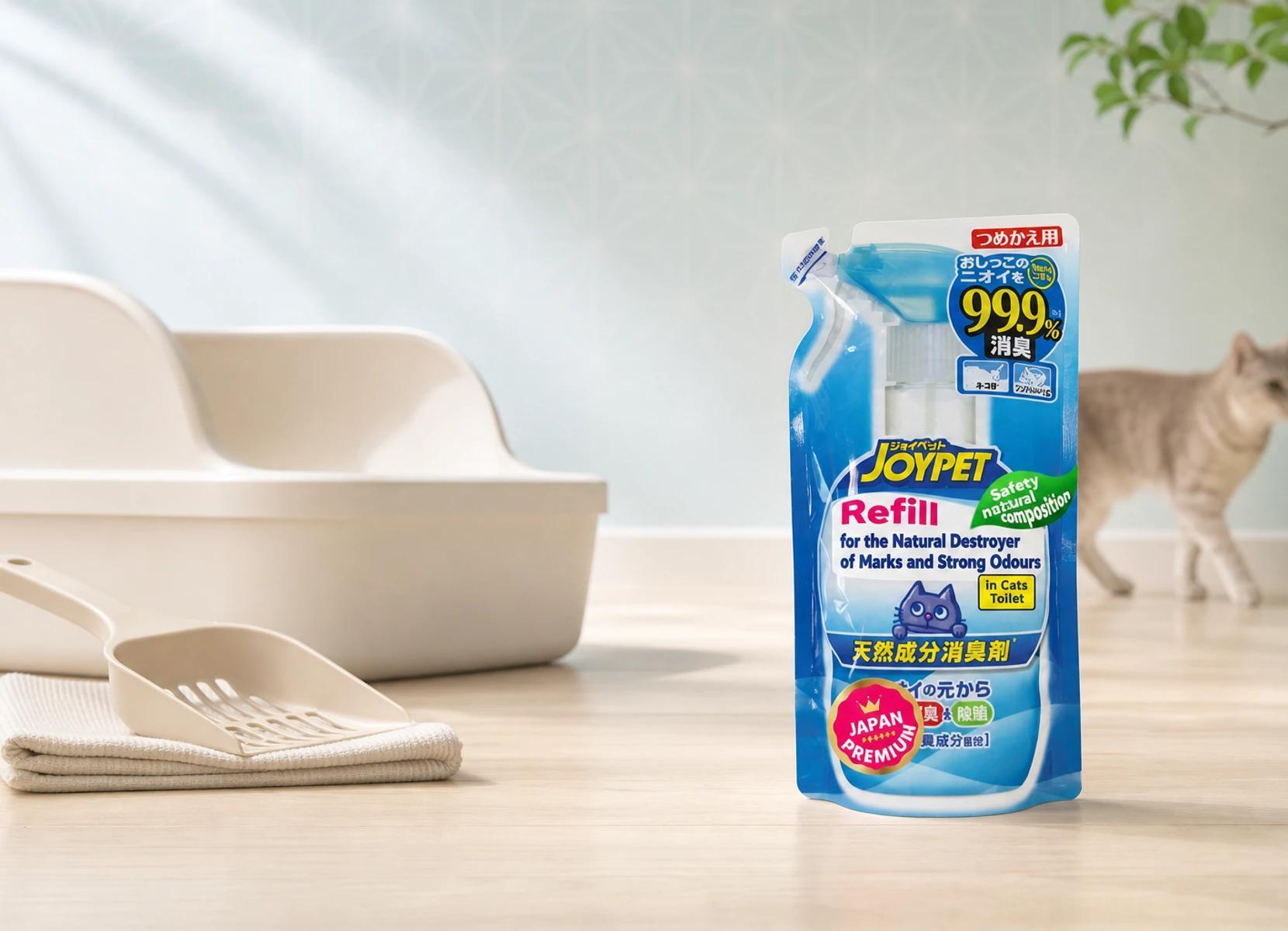
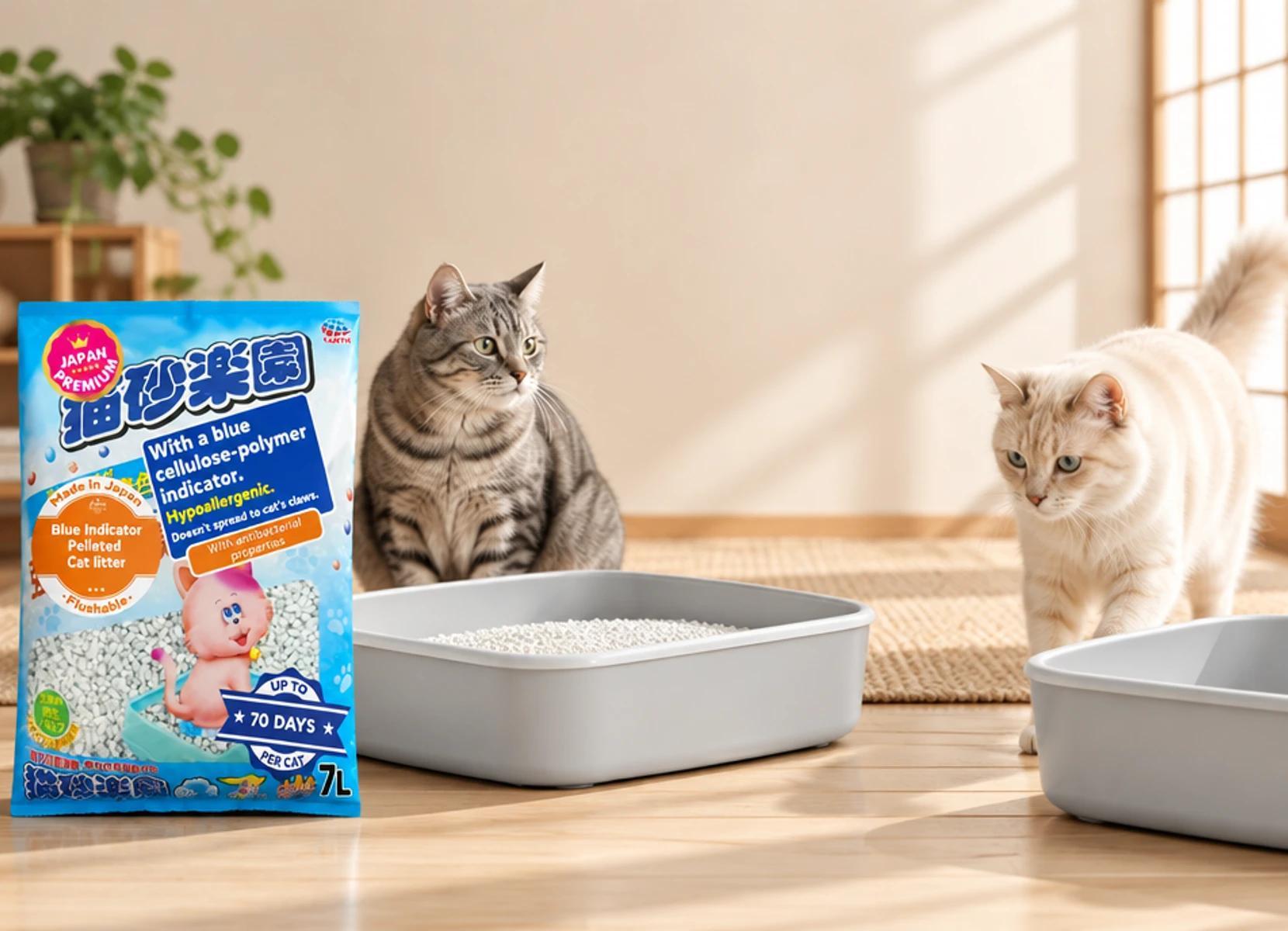
One box per cat, plus one, in separate places
The widely used rule from feline behaviour guidelines is one litter box per cat plus one extra, placed in different locations rather than side by side. Two cats: three trays. Three cats: four. Two boxes in the same corner count as one large toilet for the cat, so distance matters more than the number alone. Each cat needs a quiet, accessible tray it can use without being watched or ambushed by a housemate, and every tray should be scooped at least once a day. When these basics are in place, most avoidance problems either never start or fade quickly.
Quick setup checklist
| Question | Guideline | Why it matters |
|---|---|---|
| How many trays? | Number of cats + 1 | Less queuing and blocking; no toilet is "owned" by a dominant cat |
| Where? | Different rooms or opposite ends of the home, never next to food and water | Cats eat and eliminate apart; separate sites give a shy cat an escape route |
| How big? | Roughly 1.5 times the body length, low entry for kittens and seniors | Small trays lead to misses over the edge and faster soiling |
| Open or hooded? | Offer both if unsure and observe | Hoods trap odour inside and hide an approaching housemate |
| Which litter? | Unscented, fine and soft, changed gradually | Many cats reject strong fragrance and rough textures |
Why sharing goes wrong in multi-cat homes
Cats are solitary hunters that tolerate company when resources are plentiful. A single toilet becomes a bottleneck: one cat sits nearby and "guards" it, another waits too long, and a third quietly chooses the bathroom rug. Research and clinical guidelines on feline environmental needs describe multiple, separated resources as the most effective way to lower this kind of tension. Extra litter boxes are the cheapest stress reduction you can buy. Watch for a cat that only uses the tray when the others are asleep, or sprints away after finishing: both are signs of competition.
Cellulose-polymer litter with a blue wetness indicator
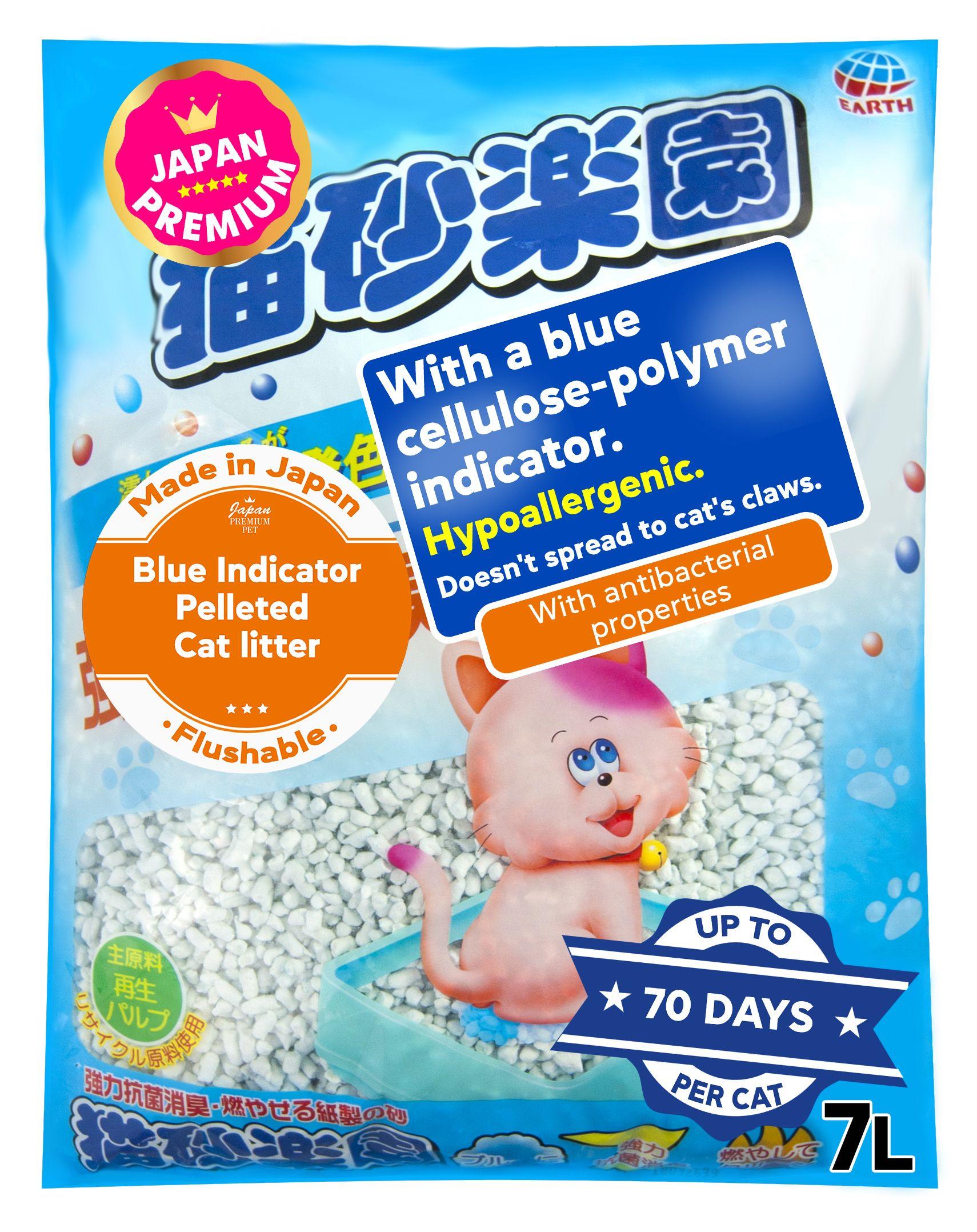
Japan Premium Pet
Cellulose-polymer cat litter with a blue indicator, hypoallergenic, antibacterial, clumps and flushes into the toilet, 7 liters / flushable filler
View productA cleaning routine that fits two, three or four cats
Remove solids and wet clumps at least once a day; with three or more cats, twice is realistic. Top up so the litter depth stays around five to seven centimetres. Wash the tray with hot water and a mild, unscented detergent whenever you change the litter completely; how often depends on the litter type and the number of users, so follow the manufacturer and your nose rather than a fixed date. Avoid ammonia-based or strongly perfumed cleaners: to a cat they smell like another animal's urine or an unpleasant chemical. Replace scratched plastic trays every year or two, because scratches hold odour that cleaning can no longer remove.
Fast-clumping tofu litter for daily scooping

Placement: distance beats decoration
Put trays where the cat spends time and can see the room, not in a closed cupboard at the end of a corridor. Avoid loud appliances and cat flaps. In a flat, use opposite ends of the home or different rooms on the same floor; in a house, provide at least one tray per floor. For a senior cat, the nearest tray must be reachable without stairs. Never place the only tray next to the food bowls.
Activated carbon pads for the base of the litter system
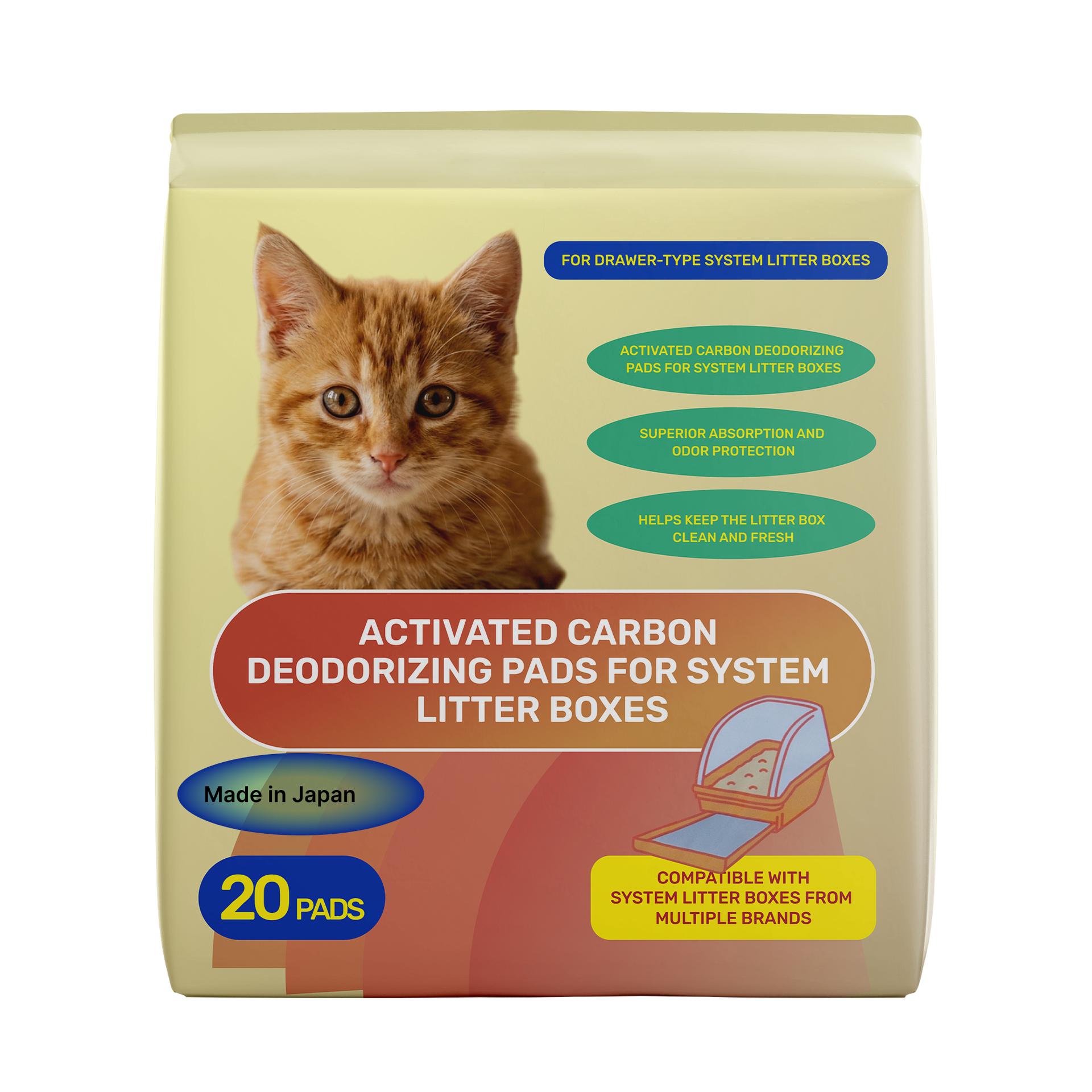
Japan Premium Pet
Deodorizing pads with activated charcoal for cat litter systems, 20 pcs., 27 × 43 cm.
View productWhen to call the vet
Introducing a new tray or a new litter
- Place the new tray without removing the old one.
- Fill it with the familiar litter first.
- Mix the new litter into the old gradually over one to two weeks.
- Keep both trays clean and let the cats choose.
- Remove the old tray only when every cat uses the new one reliably.
Frequently asked questions
Do two cats really need three litter boxes?
The "n+1" rule is a guideline, not a law. Some pairs share happily, others do not. Three separated trays remove the most common cause of avoidance, so start there and reduce only if every tray is used and no cat shows signs of waiting or ambush.
Can I put two trays side by side?
Cats usually treat adjacent trays as one toilet. Side by side is better than nothing but does not give a shy cat an alternative.
How often should I change the litter completely?
It depends on the litter, the number of cats and daily scooping. Clumping litters typically last longer than non-clumping ones. When odour remains after scooping or the litter looks saturated, change it.
Is scented litter a good idea for odour control?
Fragrance masks odour for people but can put cats off. Daily scooping, enough litter depth, a clean tray and an odour-absorbing pad in the base work better.
Why does one cat use the tray only at night?
Often another cat controls the area during the day. Add a tray in a different room and watch who goes where.
Sources
- Cornell Feline Health Center — Feline Behavior Problems: House Soiling — https://www.vet.cornell.edu/departments-centers-and-institutes/cornell-feline-health-center/health-information/feline-health-topics/feline-behavior-problems-house-soiling
- International Cat Care — How to choose and set up a litter tray — https://icatcare.org/advice/how-to-choose-and-set-up-a-litter-tray/
- International Cat Care — Litter tray problems — https://icatcare.org/advice/litter-tray-problems/
- Ellis et al. — AAFP and ISFM Feline Environmental Needs Guidelines, Journal of Feline Medicine and Surgery 2013 — https://doi.org/10.1177/1098612X13477537
- Humane Society of the United States — Preventing litter box problems — https://www.humanesociety.org/resources/preventing-litter-box-problems
- Japan Premium Pet cat litter range — https://japanpremium.eu/de/categories/cat-litter
Find the right care products
Compare Japan Premium Pet products selected for this routine.
View products