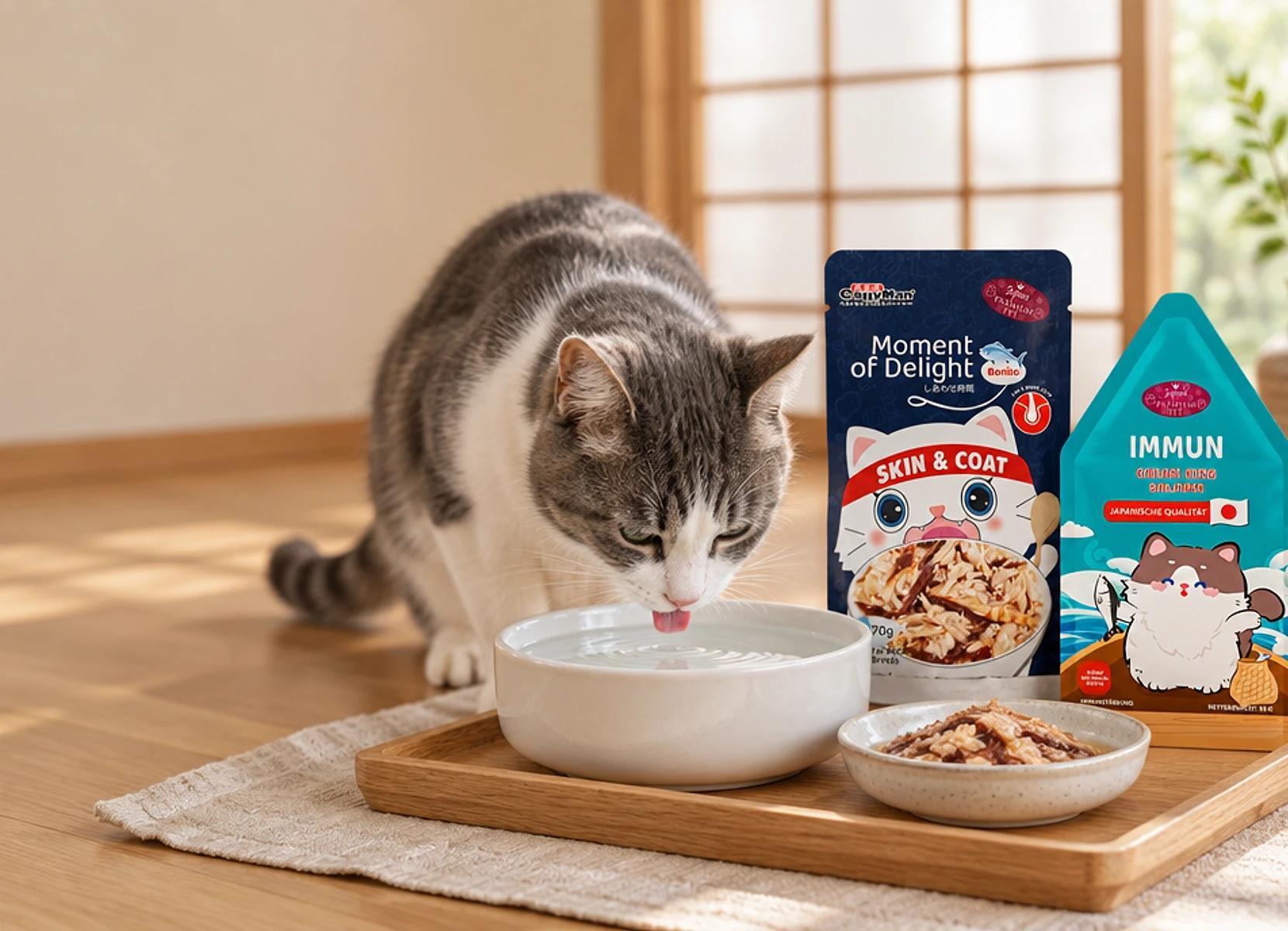
Many cats drink little, and that is not always a problem
Cats naturally have a low thirst drive and have always covered much of their water needs from food. A cat that eats mostly wet food may hardly touch its water bowl and still be well hydrated. Low drinking becomes a concern when a cat lives mainly on dry food and drinks little, when the clumps in the litter tray get fewer and smaller, or when a cat suddenly drinks much less or much more than usual. The most effective ways to raise water intake are more moisture in the food, wide bowls in the right places, fresh water every day and, for some cats, flowing water. This guide explains how much water a cat needs, how to recognise dehydration and what helps in everyday life.
Where a cat gets its water from
| Source | Water content | What it means in practice |
|---|---|---|
| Wet food (pouches, cans, mousse) | At least about 75 percent | Most of the daily water arrives with the meals; the cat may drink little from the bowl |
| Dry food | About 6 to 10 percent | The cat has to drink almost all of its water separately |
| Food with added water | Depends on how much you add | In one study, dry food hydrated to about 73 percent moisture raised total water intake by roughly 40 percent |
| Water bowl or fountain | 100 percent | Essential for every cat and especially on dry food; bowl shape and placement matter |
How much water does a cat need?
As a rough guide, a healthy adult cat needs about 50 millilitres of water per kilogram of body weight per day in total, so around 200 millilitres for a 4 kg cat. This total includes the water in the food as well as what the cat drinks. A cat that eats about 200 grams of wet food a day already takes in roughly 150 millilitres with its meals, so it may drink only a little on top. A cat fed only dry food has to drink nearly the whole amount. Needs rise in warm weather, with more activity and with some illnesses. Exact measuring is hard, especially with several cats, so watch practical signs instead: the water level in the bowls, the number and size of urine clumps in the litter tray and your cat’s body weight.
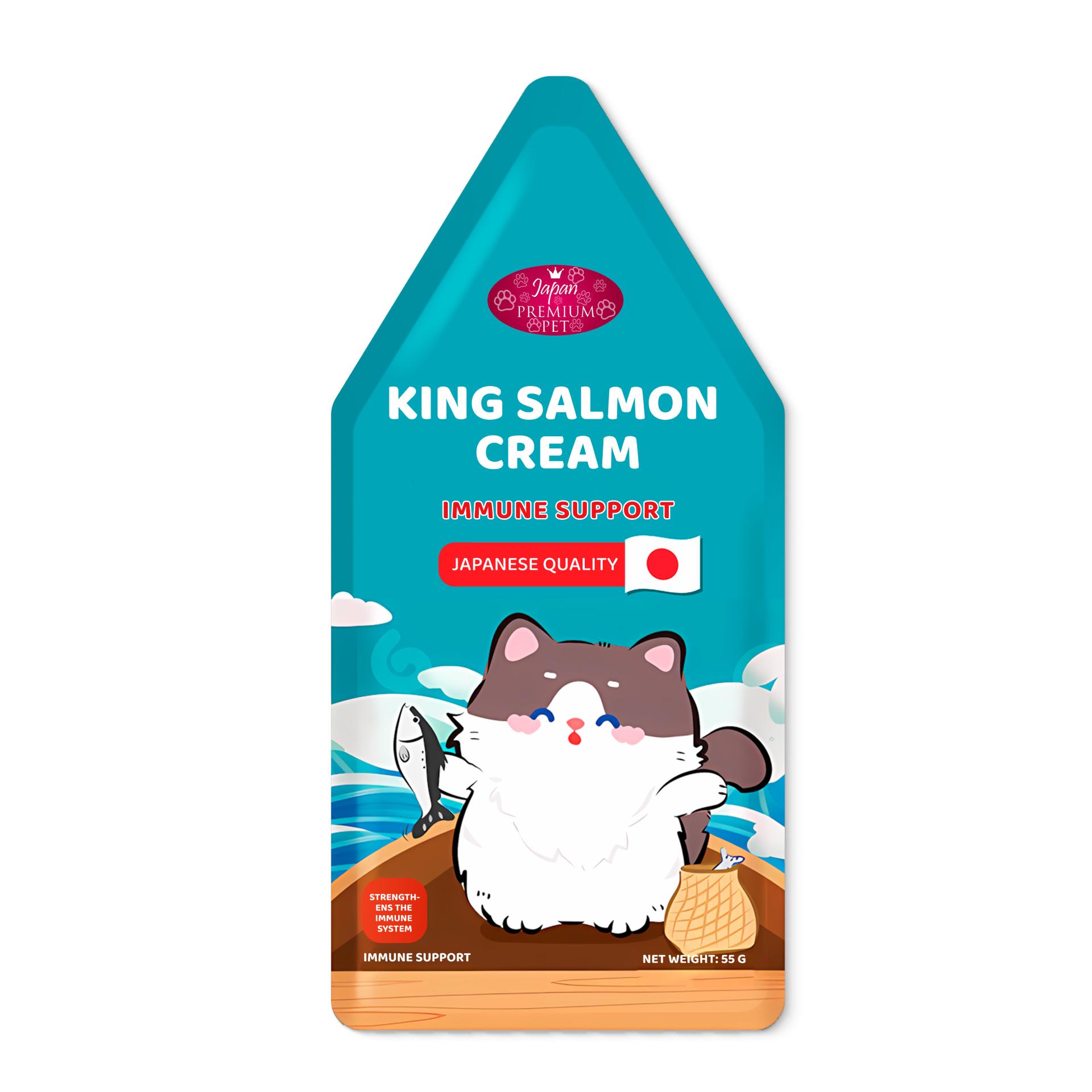
Complete cream mousse with salmon as a moist snack or topper
More moisture in the bowl: the most reliable lever
The simplest way to get more water into a cat is through its food. Feeding part or all of the daily ration as wet food raises total water intake, and research shows that cats on moist diets produce more and more dilute urine. If your cat prefers dry food, you can soak a portion with lukewarm water just before serving, increasing the amount slowly over several days, and remove leftovers after about an hour. A spoonful of water stirred into wet food works the same way. Many cats also enjoy an occasional saucer of unsalted broth or the water fish or chicken was cooked in, as long as it contains no onion, garlic or seasoning. Make changes gradually, because cats often reject sudden changes in taste and texture.
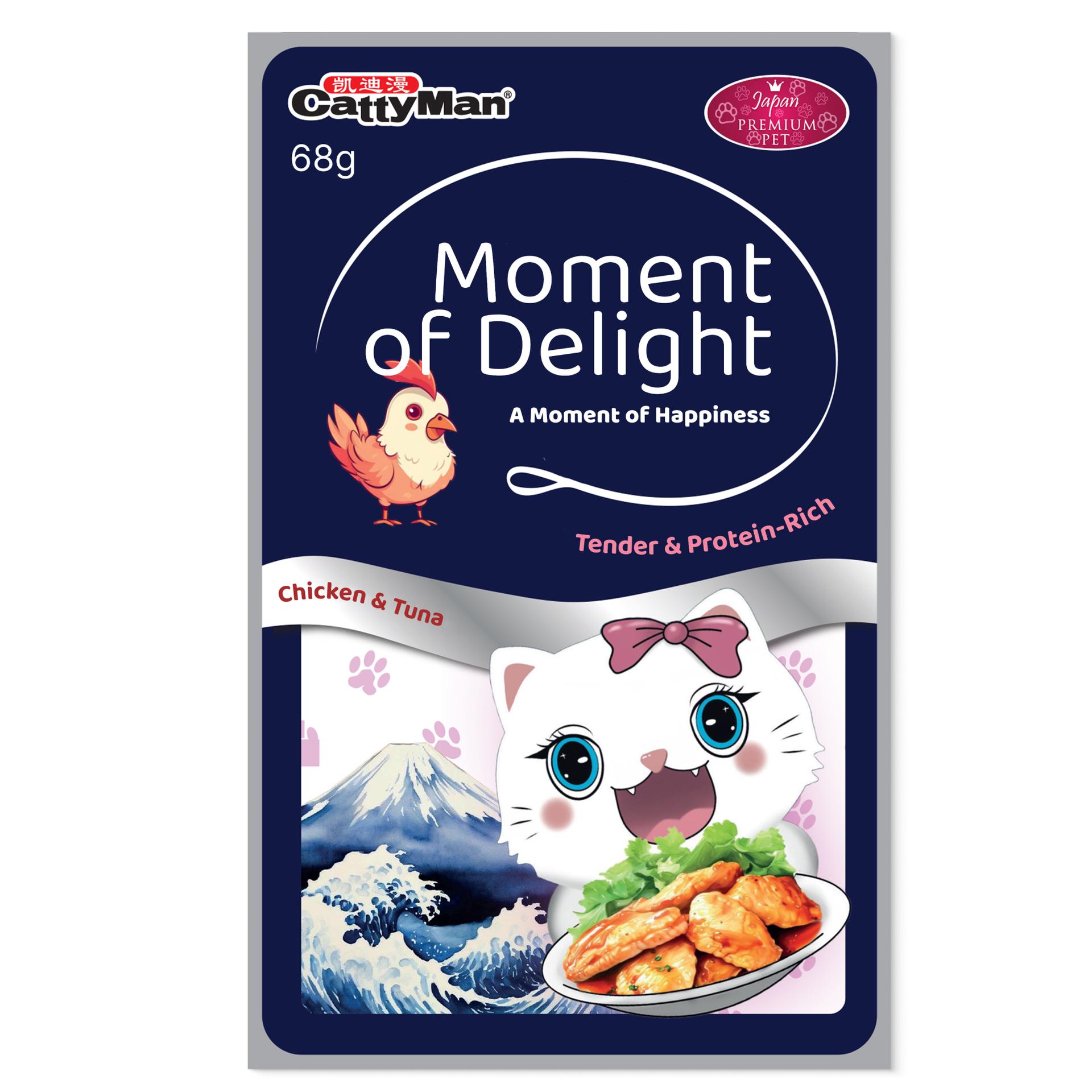
Wet food pouch with tuna, chicken and bonito for a moisture-rich main meal
Bowls, places and fountains
How water is offered matters as much as how often it is refreshed. Many cats prefer wide, shallow bowls made of glass, ceramic or metal rather than plastic, filled to the brim so that their whiskers do not touch the edges. Put water away from the food bowl and the litter tray, in quiet places where the cat can drink without being surprised from behind, and avoid double bowls that combine food and water. In homes with several cats, offer at least one water bowl per cat plus one extra in different rooms. Some cats clearly prefer moving water from a fountain or a dripping tap, while others ignore it, so offer a fountain alongside a normal bowl rather than instead of it. Change the water and wash the bowls every day.
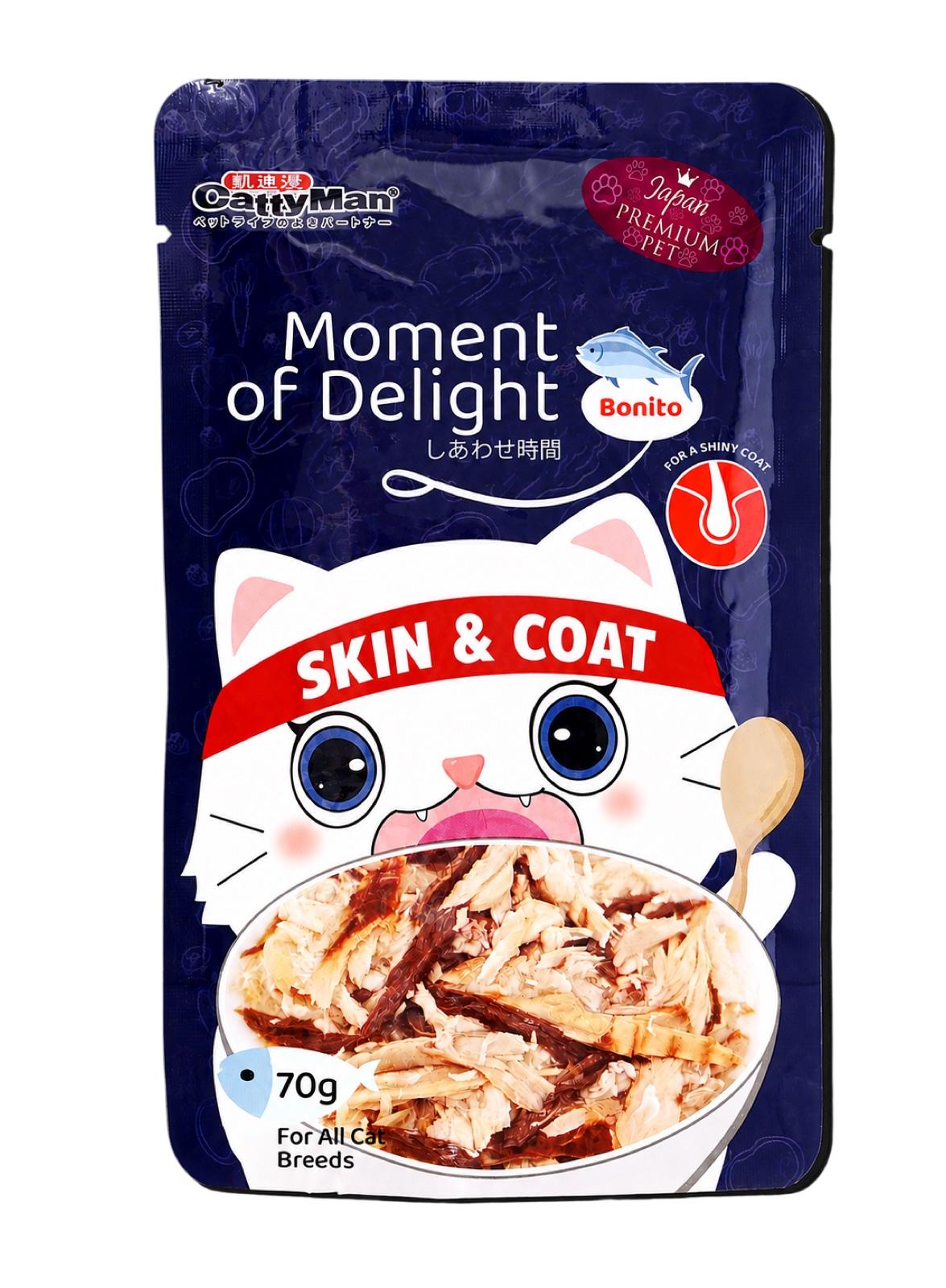
Pacific tuna wet food for variety in a wet-food routine
Japan Premium Pet
Japan Premium Pet Functional Wet Cat Food “Moment of Happiness” with Pacific Tuna, Supports Eye Health & Coat Shine, 70 g
View productWhen low drinking needs a vet
Eight ways to get more water into your cat
- Feed part or all of the daily ration as wet food.
- Stir a spoonful of lukewarm water into wet food, or soak dry food just before serving, and increase the amount slowly.
- Use wide, shallow glass, ceramic or metal bowls and fill them to the brim.
- Offer at least one water bowl per cat plus one extra, away from food and the litter tray.
- Change the water and wash the bowls every day.
- Try a fountain or a dripping tap in addition to the normal bowls.
- Offer unsalted broth without onion or garlic as an occasional extra, or freeze it into ice cubes for the water bowl.
- Change one thing at a time and watch the litter tray to see what works.
Frequently asked questions
How much should a cat drink per day?
A healthy cat needs about 50 millilitres of water per kilogram of body weight per day in total, counting the water in its food. A cat on wet food gets most of this from its meals and may drink very little from the bowl.
My cat hardly drinks since I switched to wet food. Is that normal?
Yes. Wet food contains at least about 75 percent water, so the cat needs much less from the bowl. Keep fresh water available anyway and watch for normal urine clumps in the litter tray.
Do drinking fountains really help?
For some cats, yes. Many cats like moving water, but not all of them, so offer a fountain as an additional source next to normal bowls and keep it clean.
Can I give my cat milk instead of water?
No. Milk is not a substitute for water. Many adult cats do not tolerate the lactose in cow’s milk and react with diarrhoea, which costs them even more fluid.
When should I see the vet?
If your cat is lethargic, stops eating, passes little or no urine, strains in the litter tray or suddenly drinks much more or much less than usual. Straining without producing urine is an emergency.
Sources
- International Cat Care — How to encourage your cat to drink — https://icatcare.org/articles/how-to-encourage-your-cat-to-drink
- VCA Animal Hospitals — How to get your cat to drink more water — https://vcahospitals.com/resources/preventive-cat/nutrition/tips-to-encourage-cats-to-drink-more-water
- Buckley et al., British Journal of Nutrition (2011) — Effect of dietary water intake on urinary output, specific gravity and relative supersaturation in the cat — https://www.cambridge.org/core/journals/british-journal-of-nutrition/article/effect-of-dietary-water-intake-on-urinary-output-specific-gravity-and-relative-supersaturation-for-calcium-oxalate-and-struvite-in-the-cat/7FF71DDA2706FDCDA3BA961C3D8DB46F
- Cornell Feline Health Center — Feeding your cat — https://www.vet.cornell.edu/departments-centers-and-institutes/cornell-feline-health-center/health-information/feline-health-topics/feeding-your-cat
- Japan Premium Pet cat nutrition range — https://japanpremium.eu/de/categories/cat-nutrition
Explore the nutrition range
Compare the Japan Premium Pet foods and treats selected for this guide.
View products