
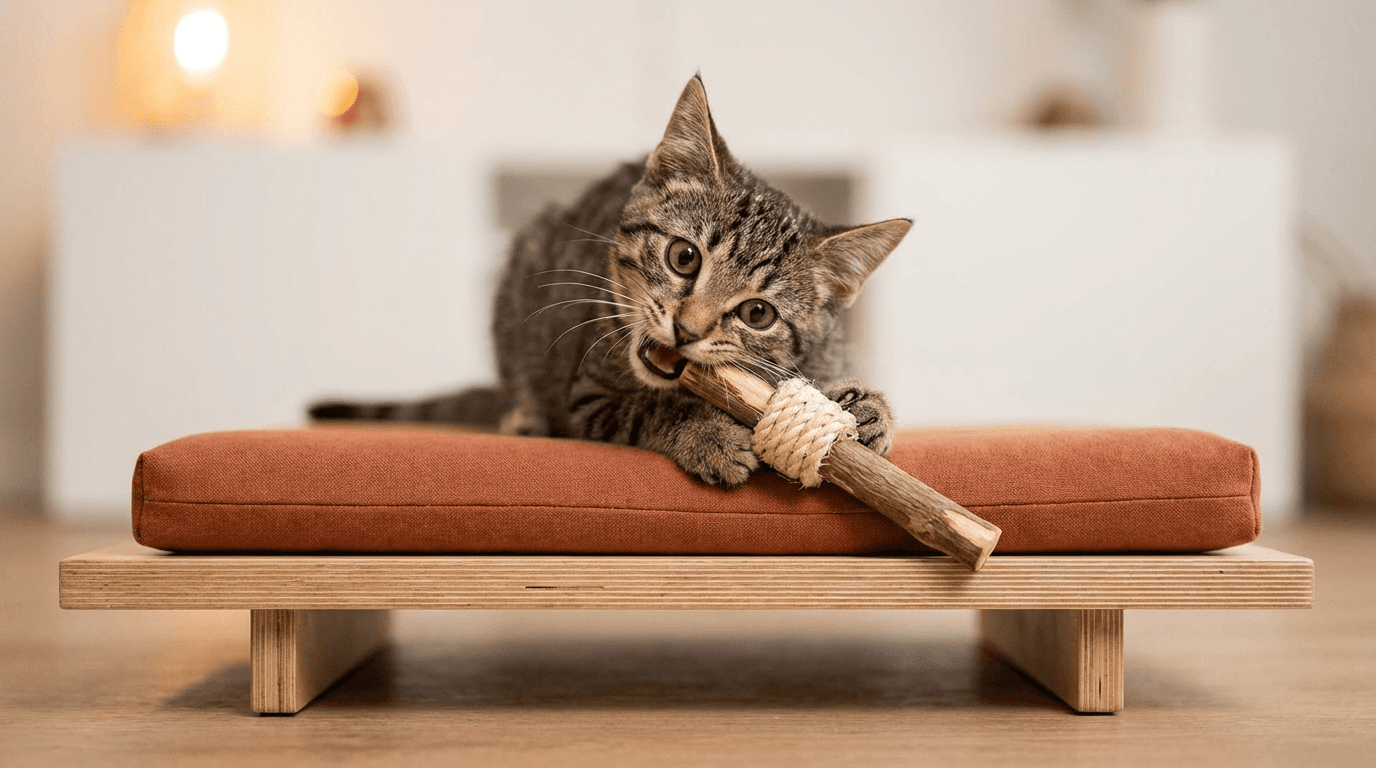
Scratching and Chewing: Not Misbehavior, But Nature
When your cat scratches the couch or gnaws on table legs, it's not a sign of spite or poor training. It's the manifestation of deeply rooted biological instincts. Scratching serves claw maintenance, territorial marking through scent glands on the paws, and muscle stretching. Chewing supports dental cleaning, satisfies hunting instincts, and can serve as a stress outlet.
Suppressing these instincts through punishment doesn't change behavior — it creates chronic stress. The Japanese approach: redirect, don't fight.
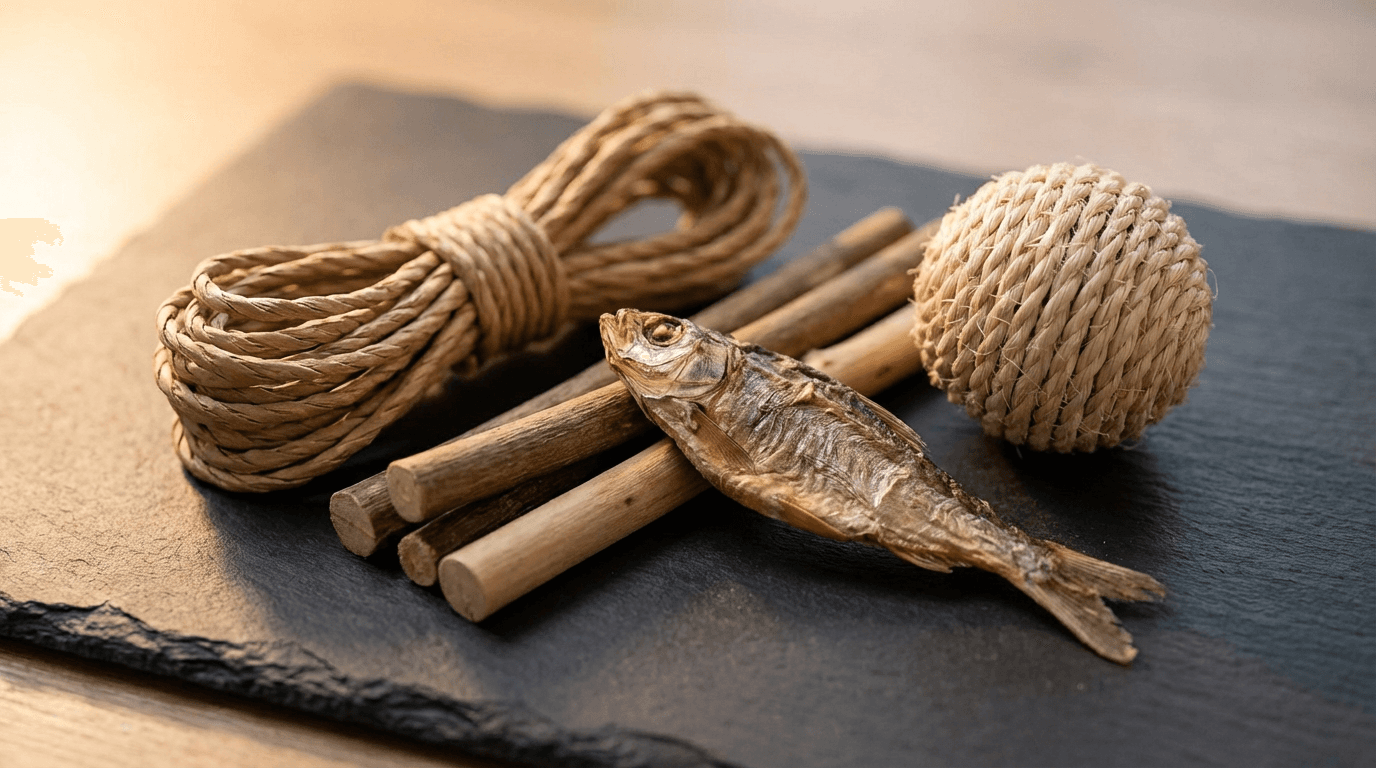
Natural Alternatives Instead of Punishment
Matatabi sticks are the ideal solution: they offer a natural, attractive chewing alternative that simultaneously cleans teeth and creates euphoria. Complementary sisal and paper rope toys provide a platform for the scratching instinct.
Pro Tip